



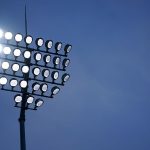
Night football remains one of the game’s most intoxicating rituals. From the Champions League anthem under the lights to Friday night derbies that set the tone for a weekend, floodlit fixtures feel different: sharper, more intense, more alive.
Yet while the spectacle remains irresistible, the beams cutting into the evening sky carry an inconvenient truth: stadium floodlighting is power-hungry, and in an era of rising energy costs and mounting climate concerns, its environmental footprint is drawing increasing scrutiny.
The scale of modern floodlighting is not trivial. A typical top-flight stadium requires hundreds of high-intensity lighting fixtures to meet broadcast standards. Traditional metal-halide lamps devour power in the megawatt range on matchdays. The result, as one UEFA energy efficiency paper noted, is that lighting alone remains one of the largest single categories of operational energy use within stadiums. That doesn’t mean it outweighs heating, cooling or hospitality demands, but it is a significant load in its own right.
The good news is that technology is already reshaping the equation. Clubs across Europe have been shifting towards LED systems, which use less energy and offer more control. When Tottenham Hotspur unveiled their £1bn stadium in 2019, they made a point of highlighting their LED floodlights designed by lighting company Musco, who confirmed the system requires around 450 kilowatts of power – roughly half what a comparable metal-halide setup would have demanded.
The savings cascade down the pyramid. The Football Foundation, which runs a national LED Floodlight Fund in England, estimates that community clubs can cut electricity use by 40 to 60 per cent by replacing legacy systems. In real terms, some grassroots clubs report saving several thousand pounds per year – a non-trivial buffer when many are fighting simply to survive.
The importance of lighting hit the headlines during Europe’s 2022 energy crunch. German second-tier side 1. FC Nurnberg announced they could not stage evening matches after local authorities restricted floodlight use.
READ: Pitch perfect? Football searches for a sustainable playing surface
In England, Mansfield Town moved a home game forward to 1pm to reduce the need for lighting, citing both cost and optics. These were temporary measures, but they offered a glimpse of what could happen if energy prices spike again or if governments impose tougher restrictions.
For elite clubs, LEDs are only part of the picture. Some have begun pairing lighting upgrades with renewable generation. Dutch clubs including Ajax have integrated solar arrays into stadium roofs, while Bundesliga sides such as Freiburg operate arenas designed to meet high environmental standards. But the challenge is scale. A solar installation might help cover base demand, yet match-intensity floodlighting often requires drawing heavily from the grid.
That gap is why night football will always carry a carbon footprint. The question becomes whether efficiencies elsewhere – transport, catering, materials – can balance the books enough for clubs to justify keeping the tradition alive.
There is also a broadcasting reality that rarely gets voiced in sustainability reports. Broadcasters want prime-time slots. Fans in Asia or the Americas tune in at convenient hours if European kick-offs remain in the evening. In financial terms, this is hard to argue with. UEFA, FIFA and domestic leagues rely on broadcast contracts that dwarf matchday revenues. Shifting wholesale to daytime fixtures may be greener, but it is unlikely to survive contact with the balance sheet.
Instead, governing bodies have leaned into incremental change. FIFA and UEFA have both published sustainability strategies that identify stadium lighting upgrades as a quick win. By pushing clubs to install LEDs and smart controls, they can claim progress without dismantling the commercial model.
There is, finally, the intangible. Ask any supporter and they will tell you night games feel different. From the glow of the floodlights on rain-slick streets to the sense of an occasion building after dark, evening football has always carried mystique. That cultural cachet matters, and administrators know it. The goal, then, is not to end night matches, but to make them less environmentally costly.
Football’s climate reckoning rarely touches the sacred cows of the sport. But floodlighting is a perfect example of a tradition whose environmental cost cannot be ignored. The technology to reduce that cost exists and is spreading rapidly, from billion-pound Premier League cathedrals to volunteer-run grounds. Yet the deeper question lingers: how much energy should the game be entitled to burn for spectacle?
For now, the glow of floodlights will continue to pierce the evening sky. But as energy costs climb and climate pressure mounts, every kilowatt that powers the magic of night football will be measured, questioned and, perhaps one day, rationed.
To learn more about Pledgeball and how you can pledge to help your club shoot up the sustainability standings, visit Pledgeball.org.