


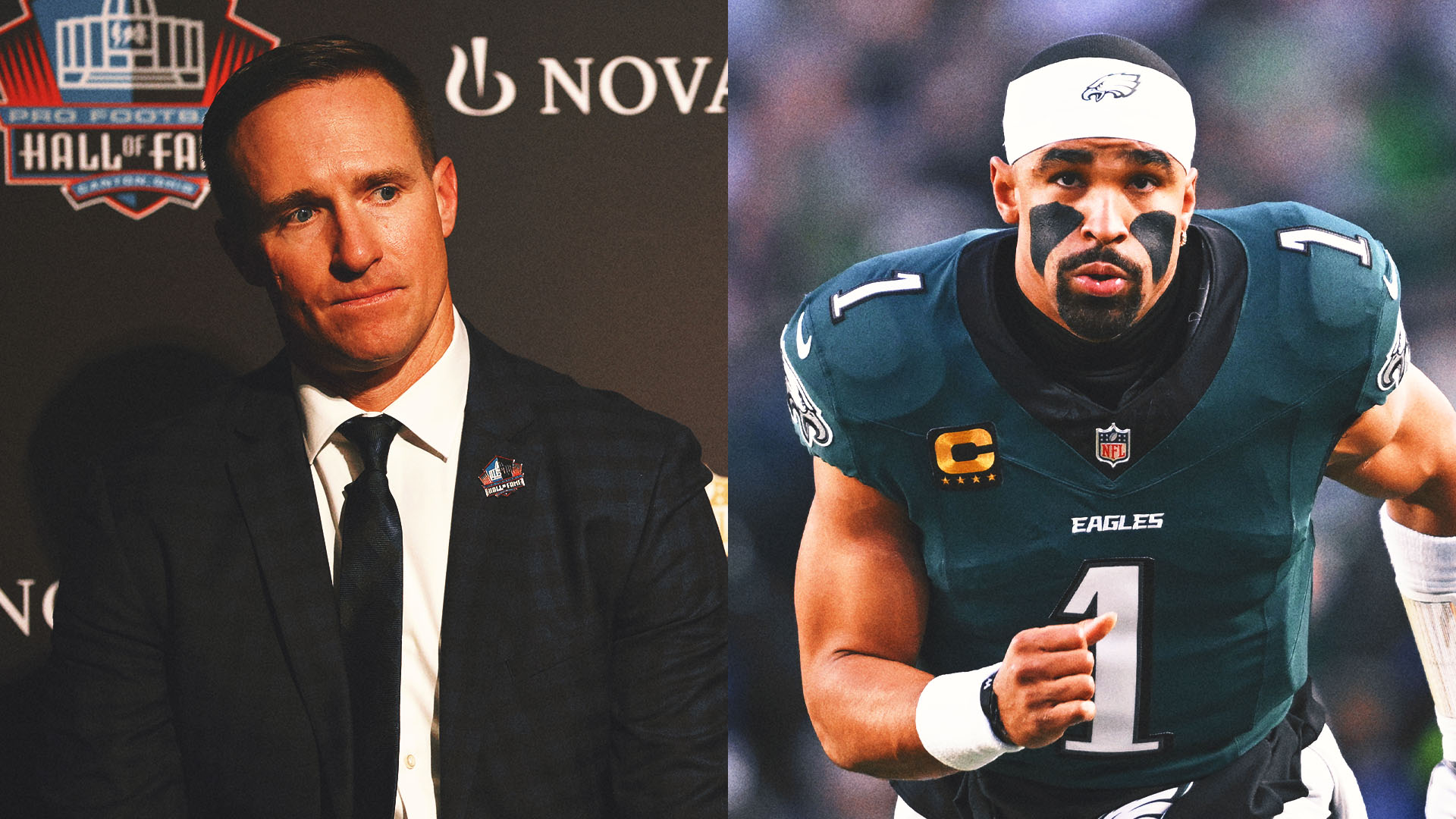
San Francisco – Walking briskly as he made his way to another appearance on Radio Row, Hall of Famer Rod Woodson was not pleased by Bill Belichick not earning a gold jacket in his first year of eligibility for the Pro Football Hall of Fame.
“I just want to make sure that we’re looking at greatness – excellence,” Woodson told me. “When you look at your time in the National Football League, as a player, you have to have multiple All-Pros. You can’t say I was never the best at my position, but now I’m one of the best to ever play. That’s not a true statement.”
Woodson’s comments follow a similar thought process to that of fellow Hall of Famer Deion Sanders, who believed the Hall had become watered down and not exclusive enough. However, Sanders was also upset about Belichick being left out and suggested that only Hall of Famers should be the ones voting on what players, coaches and contributors should be joining them.
“I wouldn’t want the Grinch who stole Christmas voting on a beauty pageant,” Sanders said.
Change is coming to the Hall of Fame voting process, but what should it look like?
I spoke with Hall of Fame president Jim Porter at the Hall’s announcement for the five players who earned their gold jackets this week: Drew Brees, Roger Craig, Larry Fitzgerald, Luke Kuechly and Adam Vinatieri.
Porter confirmed what has been reported: The 50 voters on the Hall of Fame selection committee will meet in person and closer to the announcement of the 2027 Hall of Fame class in January of next year.
And as they have done every year, Porter said the Hall will reexamine the voting process, along with the people doing the voting, to make sure everything is being executed so the most deserving candidates advance.
The selection committee last met in person in 2019, a year before COVID. The committee was scheduled to meet in person in 2023, but inclement weather affected voters’ travel and forced the Hall to cancel, reverting to a virtual meeting.
“We’ll do some tweaks, and we’ll take a look,” Porter said. “We’re going to do what’s best for the Hall of Fame. My job is to protect the integrity of the Hall, protect the integrity of the process.”
As one of the 50 voters on the selection committee, I wrote about some of the perceived flaws in the process that potentially led to, in my opinion, deserving candidates not making it because of the limited spots available, like Belichick and Patriots owner Robert Kraft, both of whom were on my ballot, along with Craig.
Belichick and Kraft not getting in has led to an onslaught of people around the league clamoring for a change in the process. And I spoke to a few of those people at different events throughout the week. As expected, they provided differing perspectives.
Ravens edge rusher Kyle Van Noy said he would like more diversity on the voter selection committee in terms of their involvement around the league.
“More players should be involved for sure, especially to give their perspective,” Van Noy told me. “I don’t think it should be so heavily media-driven. I really think they need a process where there’s more players.
“You definitely need to have media involved. You should have upper management involved. I really believe in being able to have three different levels – players, media and front office. It’s just like politics; there should be another party in there. It shouldn’t be one way where you have just media, because things could get skewed.”
Hall of Famer Anthony Munoz said candidates potentially having to wait their turn to get in is part of the process. Along with Belichick and Kraft, New York Giants quarterback Eli Manning also did not make the cut for the second time as a finalist.
“I know the whole Bill Belichick, Kraft thing has been blowing up,” Munoz told me. “But one of the things we learn is you’re not a given first-ballot anything. It was brought to my attention that guys like Bill Walsh and all the top coaches were not first-time ballot guys. So, they’ll get in.
“It’s a shame that it happened that way. I know if I was one of the voters it might be a little (different), but I had nothing to do with it.”
Former NFL linebacker and head coach Ron Rivera would like to see the Hall go back to voting for separate categories for coaches, contributors and players, not lumping them together for the selection committee to vote on.
“Those should all be separate,” Rivera told me. “You’re talking about completely different groups. If you’re going to talk about coaches, then let’s do coaches. People that contribute, whether it be broadcasters or owners, these are special people based on what they have accomplished, and we should treat them like that as we go through it.
“For everything that Coach (Belichick) accomplished, and then not to get in on the first ballot, everyone is going to sit back and go, ‘Huh?”
Bottom line for Woodson: The Hall of Fame is reserved for the best of the best.
“It’s OK to be in the second tier,” Woodson told me. “It’s OK to be there. But I think we just need to have a better understanding of what greatness is, and excellence.”
NFL to revisit tush push this offseason
Troy Vincent, executive vice president of football operations for the NFL, said the league will once again take a closer look at the tush push play made popular by the Philadelphia Eagles this offseason. The soonest the NFL’s competition committee might address the issue would be at the NFL owners meetings in March at the Biltmore Hotel in Phoenix, Ariz.
A proposal to ban the play garnered 22 votes last year, falling two votes shy of the required 75 percent majority for a rule change. NFL referees have struggled to accurately officiate the play, failing to see offsides in the close quarters of a scrum.
“It will be discussed,” Vincent said during a press conference this week. “No. 1 we want to be accurate, recognizing when someone is offsides or moving early. But also, the difficulty of when you see forward progress and blow the whistle, you blow it too early. Now, you have back or tight ends back there running and progress is still moving forward. We’ve got some work to do. We will revisit that particular play and see how membership feels about it, and if they want to do anything about it.”
Van Noy is not a fan of the tush push.
“I think it’s a dumb play,” he told me. “But I’ve heard why they don’t want to, because if it gets taken out, then you’re taking out all the pushes. So, I don’t agree with that. I think they’re just going to have to find a way to make the language right, so it doesn’t take away from being able to push a guy into the end zone.
“I don’t think it’s a play that you can referee properly, unless they get closer. So, if they are going to do that play, then they should bring the referees closer so they can see if there’s a false start or someone is lining up offside. But unfortunately, lawyers make up all the language, not actual football people.”
Like Van Noy, Los Angeles Rams defensive tackle Kobie Turner said the league needs to bring more clarity to how the play can be run.
“If we don’t ban it, we just need to be able to officiate it better,” Turner told me. “Or to be able to have more clarity on what’s required.”
An offensive tackle in the league for 13 years, Munoz believes the tush push is just football.
“You’ve got 11 guys on offense and 11 guys on defense – stop it,” Munoz told me. “Back when I played the game was a little different; we had the wedge (play). But it’s not like the offense brings in two or three extra guys. It’s still 11-on-11.
“There are some things I think have to stay. It’s tackle football. It’s a rough sport.”


