


In Driver’s Eye with James Hinchcliffe, the six-time INDYCAR winner will bring you inside the mind of a racer while breaking down the nuts and bolts of the sport for fans.
The Indianapolis 500 is the biggest race in the world. More than 300,000 people show up on race day. Millions more watch on TV. The pre-race ceremonies last an hour and build up the anticipation for the start of The Greatest Spectacle in Racing.
It’s unlike any other sporting event on the planet.
But before you get the privilege of experiencing that moment on the starting grid of the Indy 500, you first must qualify for the race. The stakes, and the speeds, will never be higher.
THE GOOD, THE BAD AND THE FAST: INDY 500 QUALIFYING
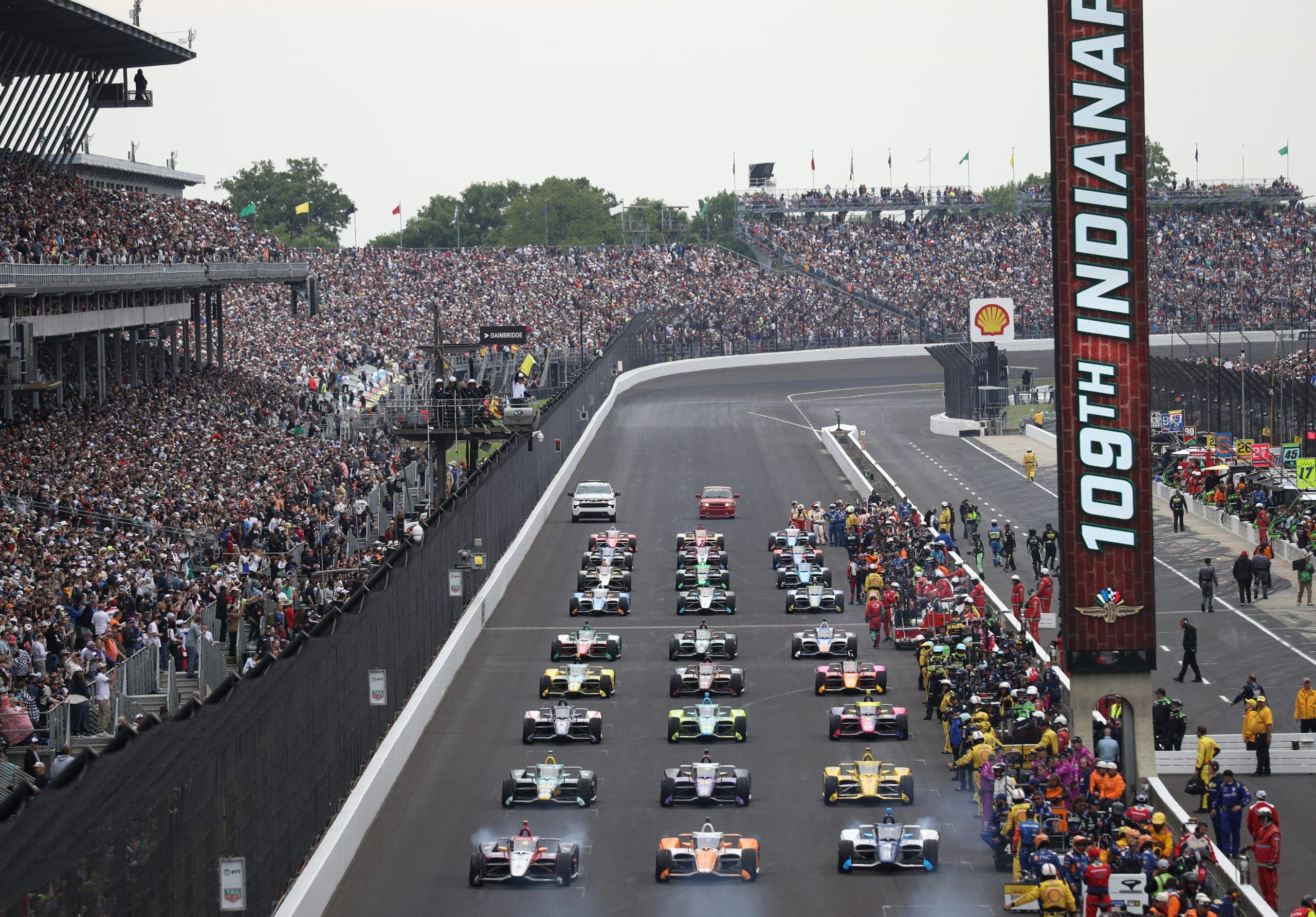
(Photo by Brian Spurlock/Icon Sportswire via Getty Images)
The Indy 500 is unique in many ways, but one of the most famous is the tradition of starting 11 rows of three cars. Thirty-three drivers in 33 cars take the green flag after the field is set in qualifying.
And that qualifying session is, by far, the most intense, most terrifying but most rewarding thing an INDYCAR driver will do all season.
Qualifying for the Indy 500 is done by posting your best average speed of a four-lap run around Indianapolis Motor Speedway’s iconic 2.5-mile oval. Speed is measured down to one-thousandth of a mile an hour, and sometimes that makes the difference.
We’re talking about four laps, 10 miles, faster than 230 miles per hour, and every thousandth counts.
The level of preparation for teams’ speedway cars for those four laps — and the Indy 500 itself — cannot be overstated. Countless hours are dedicated to special body work on the cars to reduce and eliminate every seam and every gap. Teams build special uprights to allow the wheels to turn freely and gearboxes with less internal friction to transfer more of the power from the engine to the rear wheels.
These parts aren’t built to last. They are built to go as fast as possible for exactly four laps around IMS.
When it comes time to make your qualifying run, it’s just you, the car and the track. You have the speedway all to yourself and the pressure is immense.
There is no point in the year when the speeds will be higher than this moment. With faster speeds comes higher risk, and the driver needs to be willing to risk it all to come out on top.
In my career, I ran the gambit of emotions during qualifying. I’ve started near the front, in the middle, on the last row. One year I didn’t qualify for the Indy 500, which was one of the hardest days of my career. On the other hand, I was lucky enough to start the famed race from the pole position back in 2016.
Starting on pole for the Indy 500 is a big deal for these teams and drivers. Because of all the work that goes into building the cars, if you build the fastest one, every member of the team feels tremendous pride that their hard work paid off.
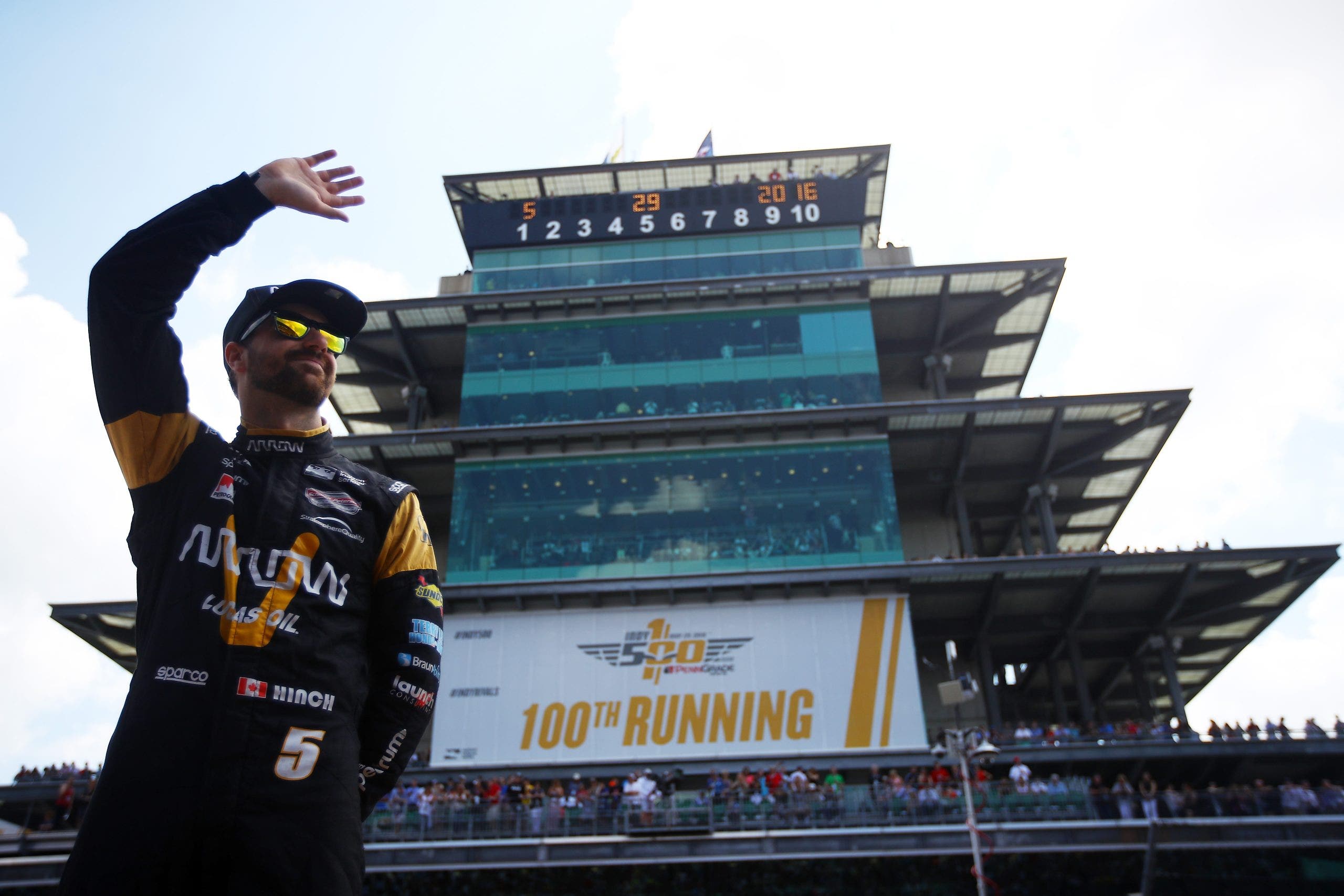
My driver introduction as the pole-sitter for the 100th running of the Indy 500 in 2016. (Photo by Chris Graythen/Getty Images)
For the drivers, it’s the fastest you go all year. Under colossal pressure, a slight misstep could end in the biggest wreck of your career. So to come out on top — to be the one who walked the line between victory and tragedy the finest — it’s something to be proud of.
For sure, in a 500-mile race, starting up front is neither a guarantee of, nor a prerequisite for, success on race day.
But it definitely helps your chances by keeping you up front and out of some of the potential trouble that could be brewing mid-field or further back.
[VICTORS AND HOPEFULS: What Makes The Indy 500 So Hard To Win?]
SOUND LIKE AN INDYCAR EXPERT: PRANK SEASON
As big a deal as the Indy 500 is for every driver, when you are living at one race track for nearly an entire month — and I do mean living, as most drivers reside in motorhomes inside Indianapolis Motor Speedway during the Month of May — you can get a bit of cabin fever.
And that can manifest itself in different ways, the most entertaining of which is pranks in the bus lot.
It seems every year, somewhere in the middle of Week 2, drivers start looking for ways to decompress, and pulling a fast one on your friends and colleagues seems to be a popular method. And no one is safe.
Making sure your motorhome is locked is key to survival in the bus lot. I made that mistake once and came home to a bus where all the toilet seats had been removed.
Conor Daly once arrived back after a long night of sponsor dinners to find his bus packed to the brim of helium balloons that were too big to fit out of the door, so they had to be popped one by one. Only, they weren’t only filled with helium, and each “pop” resulted in a shower of glitter across the floor, which also was scattered with Solo cups filled with water.
Another time, Marco Andretti awoke to find his two golf carts Saran-wrapped together. Romain Grosjean’s scooter magically found its way to the roof of the pagoda.
And who can forget when Daly’s inflatable hot tub was filled with Orbeez and rendered useless?!
As much as these pranks are a needed (and hilarious) release for drivers during a stressful month, it really highlights that while we are all fierce competitors on the track, there is a camaraderie between us.
Drivers in this series know that we take big risks out on track and can have each other’s lives in our hands. We travel the country together week in and week out for half the year.
It becomes like a big family. A traveling circus. It’s nice to see that people who drive 230 miles an hour, inches apart from one another, can still disconnect and cause a little chaos in the bus lot together.
Oh, and just FYI, Daly brought the hot tub to the track again this year…
[INDY 500: The Definitive Guide To Choosing Your Favorite INDYCAR Driver]
1 FOR THE ROAD
INDYCAR recently implemented a rule change — one that most people agree is a good step for the series.
It came off the back of the Indy Grand Prix — another reason drivers live at IMS all month — where a car was stopped on the frontstraight with a mechanical issue. But because the leaders were in the middle of a pit cycle, a local yellow was thrown to give everyone a chance to pit before a full-course caution was displayed, which would close the pit lane for service.
Employing local cautions is a protocol we have used for years and was actually implemented at the behest of the teams and drivers. It could be advantageous, depending on where you are on track. Teams always advocate for consistency in these types of calls, and race control has done a great job of that recently.
Teams and drivers also always advocate for driver safety. And unfortunately, those two things were at odds last weekend.
By being consistent with the procedure, it arguably put a driver at risk. Race control was in a “damned if you do, damned if you don’t” scenario.
As has always been the mentality of INDYCAR racing, driver safety is paramount and must come first and foremost. Given that, the decision about full-course cautions being thrown will no longer take pit cycles into account and will be solely dependent on the situation with the car or cars in question.
It’s a good step for driver safety, and it has a knock-on effect of making strategy that much tougher to call for drivers running up front. The risk of staying out too late and a yellow affecting your race has gone up, and every time the strategy is harder to call, the fans at home benefit.
MORE DRIVER’S EYE:


