


It’s Sunday evening at the Gandhi Sports Complex Ground, first constructed in 1932, where the assistant curator Raju is approached by some players of a local cricket league. “Abhishek Sharma ethe hi khede ne? (Does Abhishek Sharma also play here?),” they wonder. Raju points to the adjoining Badminton Hall behind the stadium. “Hanji, te ground toh bahar chakke uss badminton hall te marda si (Yes, and he would hit sixes landing at that badminton hall outside the stadium),” he said.
Raju’s grandfather Rakha Ram, worked as a curator at the ground too, post independence. Leading to the store room, the Amritsar native would point to a picture of former Indian captain Kapil Dev being handed a congratulatory message by Sir Richard Hadlee on breaking his then world record of 431 Test wickets. The stadium hall also had pictures of pre-Independence India pacers duo of Mohammad Nisar and Amar Singh. “My grandfather spoke about seeing Bishen Singh Bedi and others in their prime at the stadium. Later, I watched 1983 World Cup winner Mohinder Amarnath and Madan Lal paji get a welcome here.”

When Abhishek’s father Raj Kumar Sharma started dropping off a young Abhishek before heading to his bank duty, they would watch over him like guardians. “He would sit in the stands after nets and ask us to get him juice, which he was very fond of. Even if it rained on some days, he would do his fitness drills,” shares Raju.
Fellow curators Hansraj and Mangal Das, join in, with Hansraj having worked during the India New Zealand ODI in 1995, one of only two ODIs hosted by the ground. “Abhishek always asks for good bouncy wickets. While he works on tackling spin bowlers, he also believes that a good pacer can be lethal even on slow wickets,” Hansraj explains, adding the hook and pull shots flew naturally from his bat. He’s heard tales of Viv Richards’ destructive batting here in the 1980’s. “But then we too have been lucky to witness our Abhe,” shares Hansraj. “I mean Abhishek. For us he is Abhe.”
Ambarsari munda
In a city, where Sundays begin by devouring naan, poori and kulchas for breakfast, mornings also mean starting the day at the famous tea stalls. Giani Tea Stall, located on Cooper Road near the Ram Bagha complex, built during the reign of Maharaja Ranjit Singh, is helped by septuagenarian Gurmit Singh since 1956. While Giani remains a crowd favourite, the last decade has seen new tea shops offer a wide spread of tea, paneer bhurji, bun butter, butter toast and bun omelette. This Sunday morning too, joggers dig into their grand breakfast, happily discussing previous night’s 16-ball 30 by their own ‘Ambarsar da Munda’ Abhishek in the fifth T20I against New Zealand.
“Politics or Cricket are discussed at almost every table. I remember listening to cricket commentary over radio and having discussions over the batting of the likes of Kapil Dev, Viv Richards, Mohinder Amarnath or bowling of Bishen paji. In the last 6-7 years, new tea-stalls have opened with all the glittering boards. Just like the new gen Abhishek Sharma, who has brought pyrotechnics on the cricket pitch with his shots,” says Narinder Sandhu.
A 15-minute ride through the old city takes one to Ahuja Lassi, a 72-year-old shop selling milk, ghee, cottage cheese, curd and lassi. In an interview with anchor Gaurav Kapur earlier, Sharma had mentioned the iconic lassi served at the shop being his favourite, describing the amount of butter and cream on the steel glass. “Kapil paji has come to our shop too. Once, Syed Kirmani brought the whole Indian team for lassi. And now to see Abhishek coming here feels special. Jinni taarif kariye Abhishek di, ohni kat hai (All the praise for Abhishek’s batting is not enough),” says Brij Mohan.
Story continues below this ad
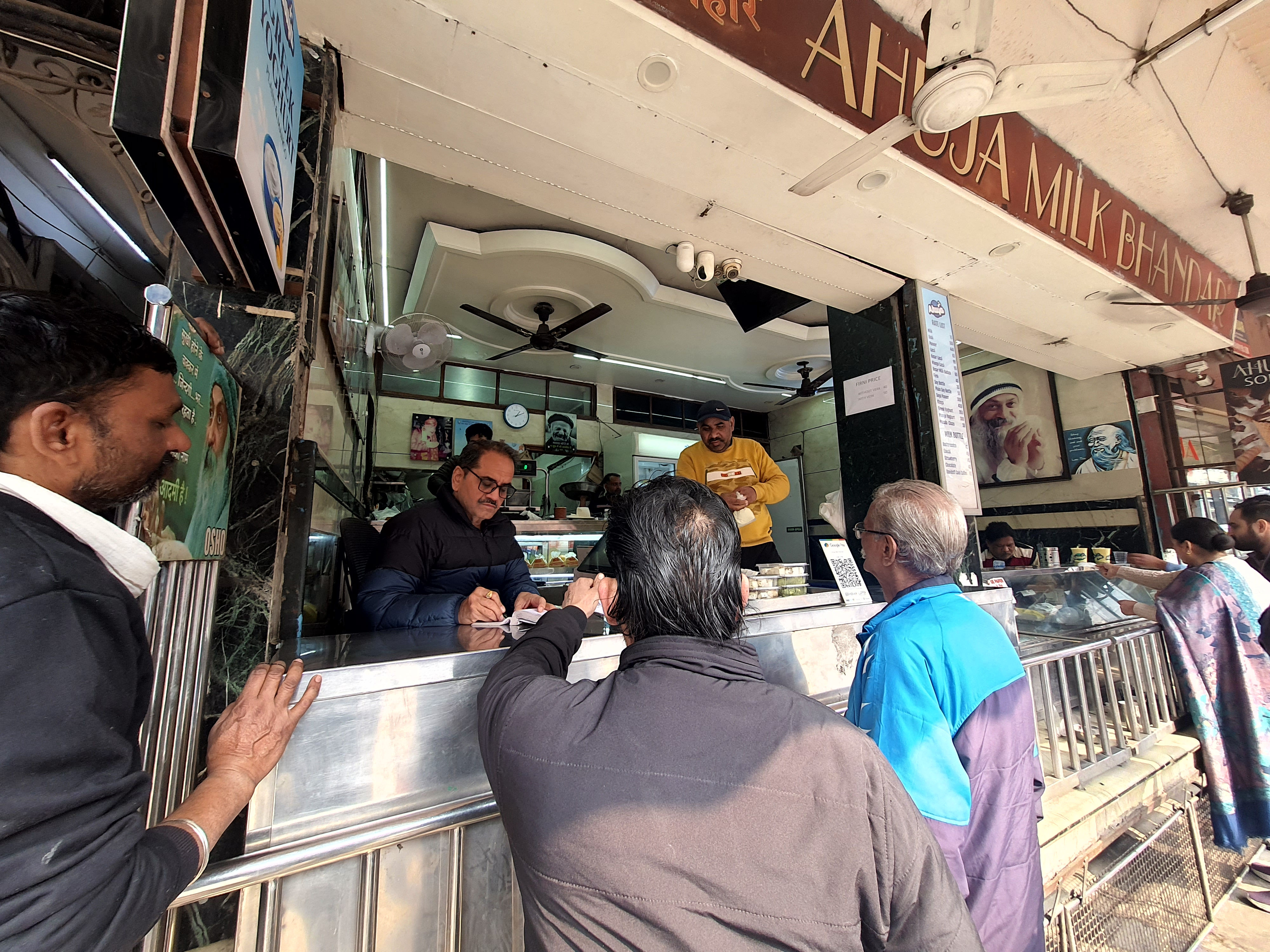 Owner Brij Mohan at Ahuja Lassi Shop in Amritsar. (Express Photo by Rana Simranjit Singh)
Another ten-minute drive goes to Islamabad Nagar, the way to which also passes outside Gobindgarh fort, where a Pakistan Army Patton tank captured in one of the wars, is displayed at the roundabout. Till eight years back, Sharmas resided at this locality. Last month, Abhishek came with singer AP Dhillon to fly kites at his old home on Lohri, a tradition followed for years. Narender Sharma has been running the kite shop since 1975 and his son Saurabh gleefully describes, “Like any other Ambarsari boy, Abhishek too loves flying kites. And all of Amritsar takes pride in seeing him play for India. Like a kite flying high, we want to see him flying high for India and win the World Cup,” he says.
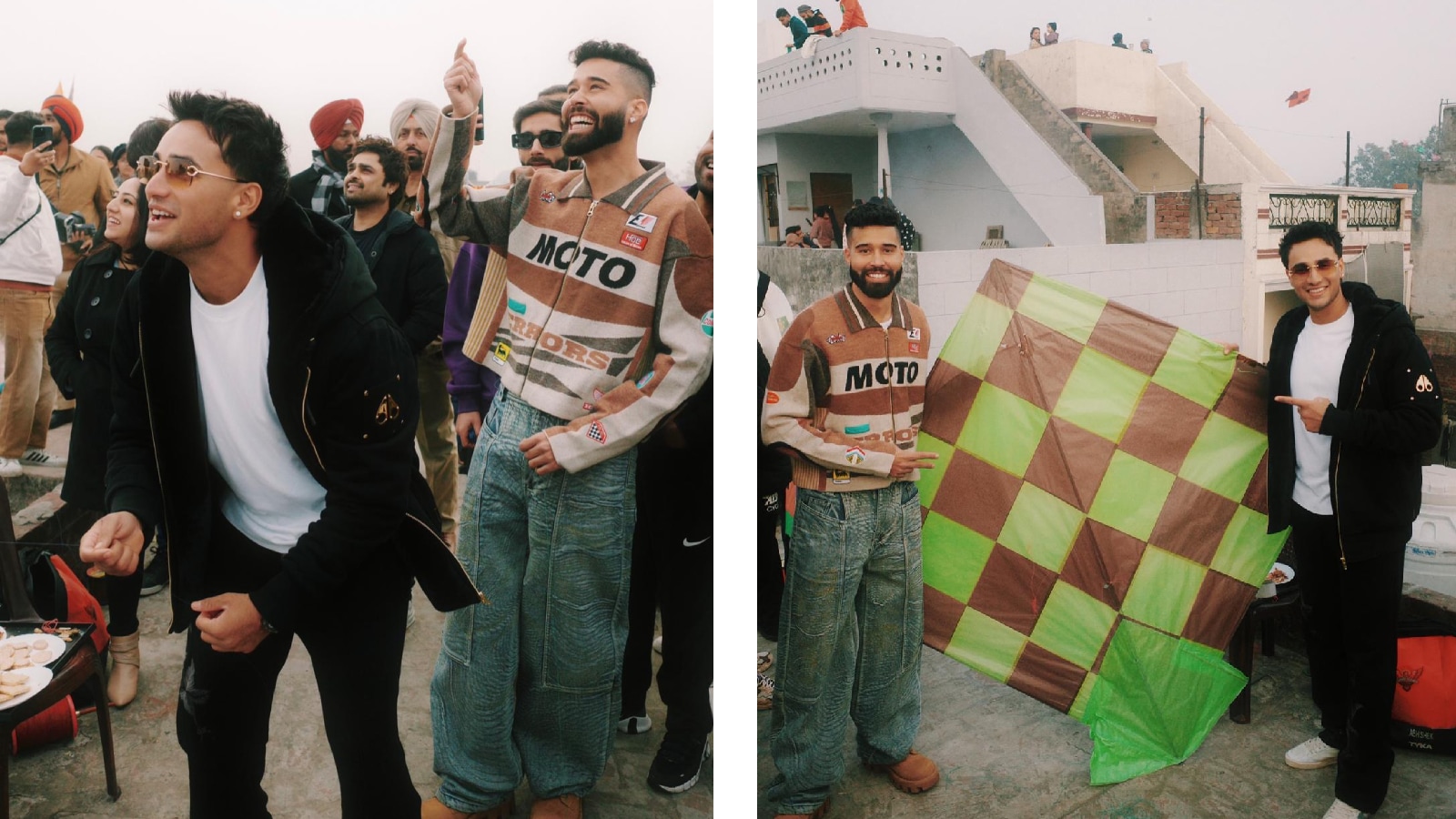 Abhishek Sharma with singer AP Dhillon at his old residence in Amritsar during Lohri celebrations. (Photo: Abhishek Sharma/Instagram)
Love for bats and the leg glance master
The Sharmas have shifted to a new plush locality in the city where building of a palatial home is underway. Cricketer-turned politician Navjot Singh Sidhu and comedian Kapil Sharma are in the close neighbourhood, even as the security guard gives directions to his home, as if out of habit. The switch of address from the old city to this glitzy neighborhood is a big deal for any Amritsari. Abhishek has arrived.
Father Rajkumar played for Punjab, and is grateful for what the city gave him. “We have been blessed to be born in Guru ki nagri (land of Sikh’s fourth Guru Ram Das) Amritsar. With Guru Kripa, we have got it all. When Abhisek was young, he only asked for new bats.” Once he took him to Raman Sports, owned by a friend, and the then 12-year-old picked up an English Willow costing Rs 18,000. “My friend asked me, such an expensive bat for such a small boy? I had 5,000 in my pocket and told him that I will hand over the rest of the money the next day. Abhishek would cherish playing with that bat the whole summer,” he recalls.
Story continues below this ad
Scorer Sushil Diwan has been another constant in the young cricketer’s life at Chandigarh and other cricket grounds in Punjab. From covering his debut at U16s to playing his first T20I in Punjab in Mullanpur last month, Diwan has seen it all. “Rajkumar, who is also a good find of mine, would always bring Abhishek to us post the match to make him analyse the knock. He believed that as scorers we see every batsman, and should tell Abhishek both his strong and weak points from the day. His leg glance and the ability to hit sixes is something which we as scorers have admired since his junior days,” recalls Diwan.
A wish and prayer
Home to the Golden Temple, Sikhism’s spiritual home, Amritsar sees its blend of cultures. From some of oldest British era churches to ancient temples like Durgiana, the city also sees the much revered Gurudwara Baba Deep Singh Shaheed, a gurdwara dedicated to the revered Sikh warrior. Sharmas visit both the gurdwara along with Golden Temple often. “The prayers are done for every member of the sangat here and like for them, we also pray to the god and baba ji to bless Abhishek. He is Amritsar’s as well as Punjab’s and India’s pride and we will pray for his success in the World Cup,” says Jitendr Pal Singh, manager of the gurdwara committee.
As the day comes to a close at the Gandhi ground, Raju and his team are getting the equipment inside. The last time the groundsmen met their ‘Abhe’ was on Lohri, when Abhisek had dropped in at the stadium for a few minutes. “As a child, I have seen Viv Richards and Clive Lloyd play here. I also saw kushti of legendary Dara Singh here at the grounds in the early 1980’s. We wish to see our Abhe play in India colours at this ground someday,” shares Raju.


