


For a sport that exploded in popularity across the world during the Covid pandemic, pickleball remains in its formative years in India. Yet its rise has been remarkable, drawing participants across age groups and backgrounds. The first major step in giving that boom a structured foundation came last year when the Indian Pickleball Association (IPA) received National Sports Federation (NSF) recognition.
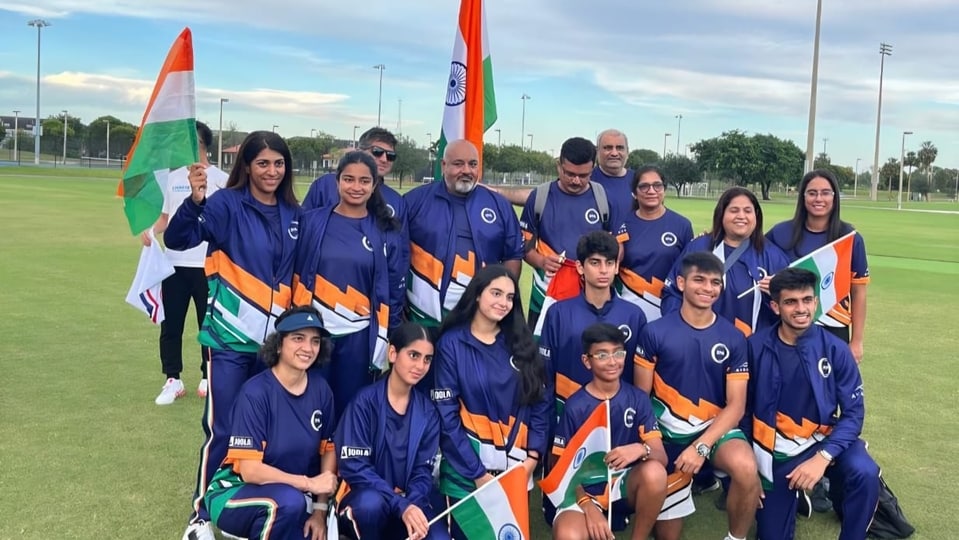
Since then, the IPA has sanctioned more than 150 tournaments, conducted the country’s first Nationals and launched the inaugural Indian Pickleball League last December. But the federation believes the next phase of growth lies beyond franchise leagues, by building the sport’s ecosystem from the ground up.
The NSF recognition, granted by the Ministry of Youth Affairs and Sports in April 2025, empowered the IPA to formally develop and regulate pickleball in India. IPA president Suryaveer Singh Bhullar said the federation is now focused on creating a sustainable pathway for players through structured rankings, coach and referee education, and grassroots expansion into schools and government-backed programmes such as CBSE sports and Khelo India.
“Recognition by the government was a major milestone for the sport. Since the IPA became the National Sports Federation, we’ve been able to implement structured systems for players across the country.
“We’ve introduced a structured ranking system, launched coaching and referee certification programmes, and conducted tournaments under the PWR ranking structure,” Bhullar told Hindustan Times.
According to the federation, more than 150 sanctioned tournaments have been held over the past year under the PWR ranking framework, ranging from PWR 50 to PWR 1000 events. Tournament organisers are assigned ranking categories based on a prescribed set of guidelines.
Beyond competition, the IPA has rolled out a coaching certification programme in partnership with US-based EPR, as well as a referee certification programme to standardise officiating across the country.
Finding its feet
For a sport still finding its identity in India, Bhullar admitted that the bigger challenge now is ensuring pickleball spreads beyond metropolitan cities. He believes that the shift has already begun.
While Gujarat and Maharashtra initially dominated the domestic circuit, the IPA says the Northeast has emerged as one of India’s strongest pickleball hubs. Growing participation has also been recorded in Jammu & Kashmir, West Bengal, Tamil Nadu and Karnataka, with several former tennis players making the switch.
“We currently have 26 affiliated state bodies, and they’re all actively conducting tournaments. The growth has spread across the country. Jammu & Kashmir and the Northeast have emerged as exciting regions. After visiting Nagaland last year, I had predicted we’d soon see outstanding players coming from there—and that’s exactly what’s happening.
“Kolkata has also developed excellent talent over the past two years, largely through players transitioning from tennis. Earlier, Gujarat and Maharashtra dominated the sport, but that’s changing quickly. South India is growing rapidly as well, with players emerging from Tamil Nadu, Karnataka and several smaller cities,” he said.
Building pickleball from the ground up
If pickleball is to evolve from a fast-growing recreational sport into a sustainable competitive sport, its future will depend on the strength of its grassroots. Recognising that, the federation has shifted its focus towards schools, not merely to popularise the sport, but to build a steady pipeline of the next generation of players.
“More schools are adopting pickleball and building dedicated courts. Earlier, parents would approach us seeking letters because schools weren’t willing to grant leave for students to compete in tournaments. That mindset is changing,” Bhullar said.
The IPA has partnered with Sports Gurukul to launch an inter-school pickleball championship this year. At the same time, it is in discussions with the government to include pickleball in the CBSE sports programme and secure its place in Khelo India.
Infrastructure, RND top agenda
The IPA confirmed it is working with USA Pickleball to establish India’s first equipment testing and certification laboratory. Although the project depends on significant private investment, the federation hopes to make the facility operational by the end of the year.
“We’re still working on it. It requires significant investment. At the moment, we’re trying to raise funds through private partnerships because government grants aren’t available to us yet. Hopefully, by the end of this year, we’ll be able to establish the facility,” Bhullar said.
The proposed laboratory is expected to reduce both the cost and time required to certify paddles overseas while encouraging domestic manufacturing.
“It would make a huge difference, particularly for Indian manufacturers. Right now, every paddle has to be sent to the United States for testing and certification, which is both expensive and time-consuming. Having that infrastructure in India would make the process much easier and encourage more Indian brands to manufacture equipment domestically. That aligns perfectly with the Make in India vision, and we’re very keen to promote indigenous manufacturing.”
For the IPA, the game plan is clear: build the courts, the coaches and the pathway first—the champions can come later.


