


This crossroads has defined almost every emerging sport. At first, popularity is enough. It fuels participation, dominates social media, attracts celebrities, and creates a sense that the sport is unstoppable. For a game as addictive as pickleball, that boom has been evident across India. But every emerging sport eventually reaches the same question: who pays for the coaches, national teams, infrastructure and grassroots programmes once the initial excitement settles?
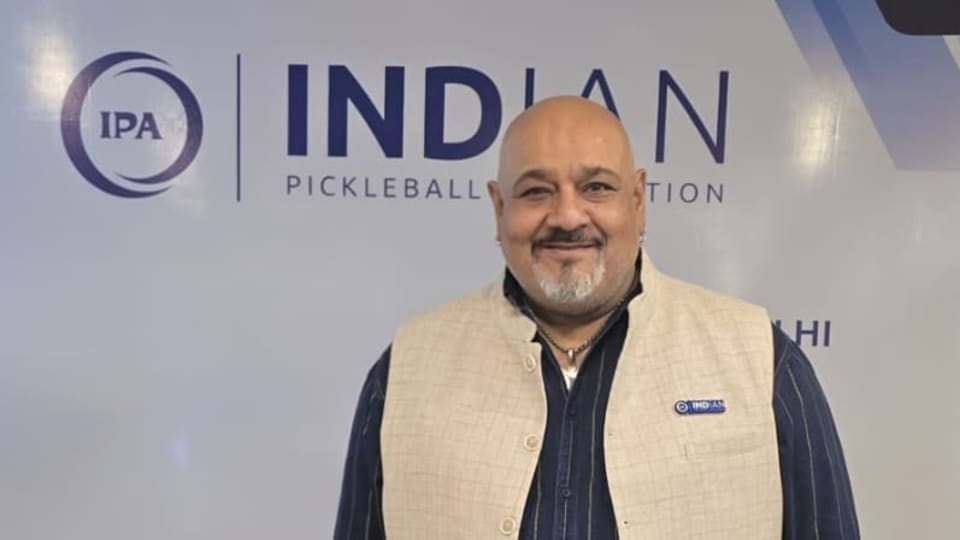
Indian pickleball has not reached that saturation point yet. Yet the Indian Pickleball Association (IPA) is already planning for what comes next. Its roadmap includes creating a sustainable pathway for players, introducing structured coach and referee education, and expanding the sport at the grassroots level. The biggest hurdle, however, remains funding.
Nearly a year after receiving National Sports Federation (NSF) recognition, IPA president Suryaveer Singh Bhullar admitted the federation is still operating without government grants. Instead, it has built a funding model driven almost entirely by corporate sponsorships, franchise owners and private investment.
“Without government funding, it’s always a challenge. But we’ve managed well so far,” Bhullar told Hindustan Times. “We’ve secured corporate sponsors to support India’s five teams for the upcoming World Cup. Financially, it’s a constant balancing act, but we’ve been able to sustain our programmes and continue growing the sport.”
The federation’s recognition by the Sports Ministry came with a mandatory two-year observation period, during which it remains ineligible for government financial assistance. That has effectively forced Indian pickleball to accelerate a model many other emerging sports may eventually have to adopt—one driven by private capital rather than public funding.
Beyond sponsorship: Asking franchises to build the sport
The clearest example of that philosophy came when Lucknow Leopards, one of the franchises in the Indian Pickleball League (IPBL), agreed to sponsor India’s Open team for the upcoming Pickleball World Cup in Da Nang, Vietnam, from August 30 to September 6.
Bhullar hopes it will become more than just an isolated gesture. In his view, franchise owners should contribute to the sport beyond league participation by investing in national teams and player development.
“I think it’s exactly the kind of model we’d like to see. Lucknow Leopards have taken the first step by investing back into the sport. Other sponsors have also come forward to support different teams, and I hope more franchise owners follow suit in the future. Rather, I see it as franchise owners taking responsibility for the growth of Indian pickleball, and that’s something we should encourage,” he said.
The federation’s vision marks a subtle but significant shift. Instead of simply owning teams for a few weeks of league competition, franchises are expected to become long-term stakeholders in Indian pickleball by supporting grassroots programmes, player development and international representation.
That naturally raises questions around potential conflicts of interest. Bhullar, however, dismissed those concerns, insisting that sponsors only provide financial backing while team selection remains entirely independent.
For the IPA, the bigger objective is encouraging businesses to invest in the overall ecosystem rather than limiting themselves to league ownership.
Private capital beyond the court
The federation’s reliance on private funding extends beyond competition.
One of IPA’s flagship projects is establishing India’s first pickleball equipment testing and certification laboratory in partnership with USA Pickleball. The facility is expected to reduce certification costs for Indian manufacturers while encouraging domestic paddle production.
Without government support, however, the project is entirely dependent on private investment.
“We’re still working on it. It requires significant investment. We’ve already held discussions with USA Pickleball, which is keen to partner with us. At the moment we’re trying to raise funds through private partnerships because government grants aren’t available to us yet. Hopefully, by the end of this year, we’ll be able to establish the facility,” Bhullar said.
Government funding, once available, would undoubtedly accelerate the federation’s plans. But Bhullar insists waiting is not an option. Instead, the IPA has chosen to keep Indian pickleball moving by relying on corporate partnerships and private investment to build the sport’s next phase.


