


Mumbai: It is Arthur Ashe Kids’ Day at the US Open. Jordan Manlapig, a 39-year-old American resident, is at one of the practice courts hosting women’s world No.1 Aryna Sabalenka, four-time Grand Slam champion Naomi Osaka and men’s world No.2 Alexander Zverev.
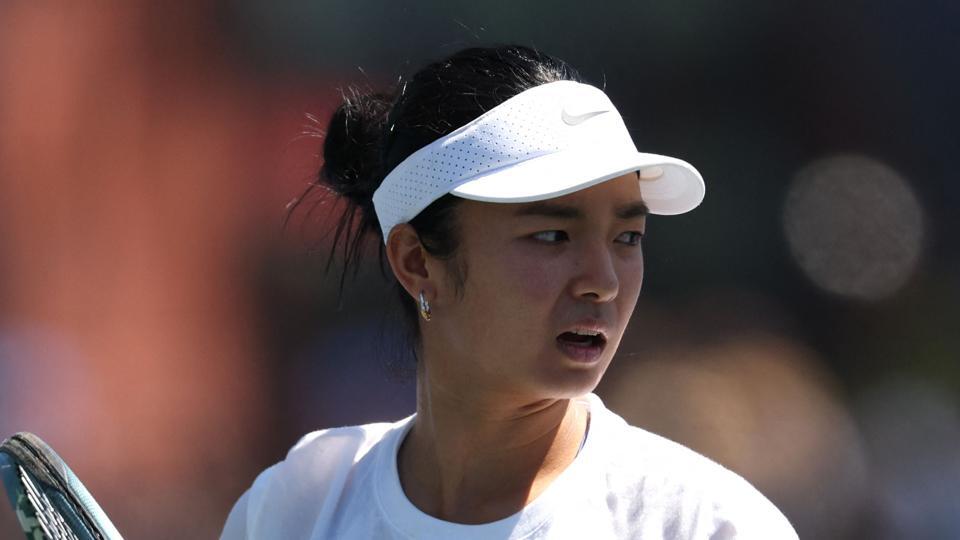
Someone else’s hitting session, though, attracts the biggest crowd for the day — Alexandra Eala. “That says a lot about her star power,” Manlapig, whose parents are Filipino, told HT from New York.
Manlapig is part of a large Filipino community in New York that has flocked to Flushing Meadows over the last week to catch a glimpse of one of their own. A tennis professional from The Philippines is rare enough, a world No.18 in women’s singles even more so.
And yet, Eala’s rocketing star power isn’t just fuelled by the Filipino community or confined to The Philippines.
Over the past few months, the 21-year-old has filled stadiums worldwide and swelled online views like only a handful of women have in the history of tennis.
In Washington at a WTA 500 tournament, around 80% of the ticket enquiries were for Eala’s matches, according to the tournament chairman. Top seed Jessica Pegula, whom the southpaw beat to become the first Filipino to win a WTA title, said it was the “best Monday final crowd” she had ever seen. Playing her next match in Toronto, Eala drew a sellout crowd on a Wednesday.
In New York, Eala’s entry into a packed Arthur Ashe Stadium for the Stars of the Open event had a concert vibe to it. The video of her match with Iva Jovic in it has 18 lakh views on YouTube. For context, the match of Learner Tien, an exciting US prospect, and French Open runner-up Flavio Cobolli, has 1.6 lakh views.
Manlapig has followed Eala since she won the US Open girls’ singles title in 2022 (again, the first Filipino to do so). He waited in line for three hours at the 2026 Australian Open for her match, and watched Eala beat Osaka and Pegula in Washington.
The driving force behind Eala’s soaring popularity is a Filipino value called “kapwa”, which roughly means shared identity, as he puts it.
“When Alex accomplishes something like winning a match, it’s a modern example of kapwa, in which we take pride that one of our own has accomplished a feat on the world stage,” said Manlapig. “Essentially, we see ourselves in her.”
Eala, too, feels that sense of “kapwa”.
“I think a reason also why I have such a big following is because people see themselves in me,” she said on Served with Andy Roddick podcast.
Extremely eloquent for her age, Eala has spoken about understanding the values and culture she represents. Tennis culture was as distant in the land of Manny Pacquiao as The Philippines is in the sport’s landscape. What began as a way to bond with her grandfather turned into a possible career pathway for Eala. One in which nobody had walked before in her country.
“There’s not a lot of tennis players in The Philippines, something I’d hope would change in the near future… So, for me, it was something I had to take step by step, and so many things that my family and I had to learn on our own.”
Eala said this at the Mumbai Open last February, when, in contrast to being the cynosure of world media in a Grand Slam, she was speaking to a couple of reporters at a WTA 125K event. Even then, as a highly-rated trainee of the Rafa Nadal Academy, where she entered in 2018, she carried some spotlight. Even then, she knew what it meant.
“It’s such a big privilege to have this support, and this, quote unquote, spotlight,” Eala said, standing by the CCI courts. “Especially the support I get from home, from the Filipino people, it’s such a blessing. Because I know that not a lot of people in this ranking span are able to get that.”
Eala was then outside the top 125. After making the 2025 Miami Open semi-final, winning her first Slam match at the 2025 US Open and reaching the Round of 16 at the 2026 Wimbledon, she is now in the top 20. The stardom surge has been even more gigantic than the rankings rise. What hasn’t changed, however, is her humility.
Eala termed herself “a drop in the ocean” when asked about her impact on tennis in New York this week. “You can’t teach class, and Alex has class,” said Manlapig.
She also has the kind of following that is flowing from all corners of the globe. Back home, Eala got a public fan homecoming in Makati and a reception at the Malacanang Palace by the Philippines president after her Wimbledon exploits.
“She is putting our country on the world stage,” said Manlapig, “in a sport and space where we never really imagined we could have a presence.”
Eala is not just a presence in tennis at the moment. She is a phenomenon.