


About half an hour after a long telephonic interview on batting, the mobile rang again. It was Sachin Tendulkar. He had been thinking about a question he had already answered and wanted to add more.
Even if he hadn’t called, it would have been fine. The prized interview was anyway glittering with light he had thrown on the nuance of batting. But that’s Tendulkar — no half-measures when it comes to sharing, or availing, cricketing wisdom.
This last Saturday, the night before the World T20 final, it was fine if Tendulkar hadn’t called Sanju Samson, the batsman who had reached out to him several months back and had been in constant touch since. Almost nursed back to form by Indian cricket’s habitual healer, Sanju had touched peak form in the two games leading to the final. Now came the biggest night, with sky-high expectations and the law of averages waiting.
Tendulkar had been busy, festivities at home. But like his late father Ramesh Tendulkar, the popular Marathi literature professor known for lovingly hand-holding his struggling students, he found time for the player on the mend.
Had Sanju not spoken about Tendulkar at the awards ceremony, the world would never have known the role played by Indian cricket’s habitual giver — a rare great who prefers working anonymously. There are those who put out videos and pictures of old training sessions when their wards do well. Then there is Tendulkar, fiercely anonymous, like a doctor under oath maintaining confidentiality.
In several interviews, he has been asked about the time he spent with Virat Kohli during his slump, or the word he had with Shubman Gill before his career-defining Test tour to England. Without exception, he has skirted the issue, insisting these questions be asked of the beneficiaries themselves.
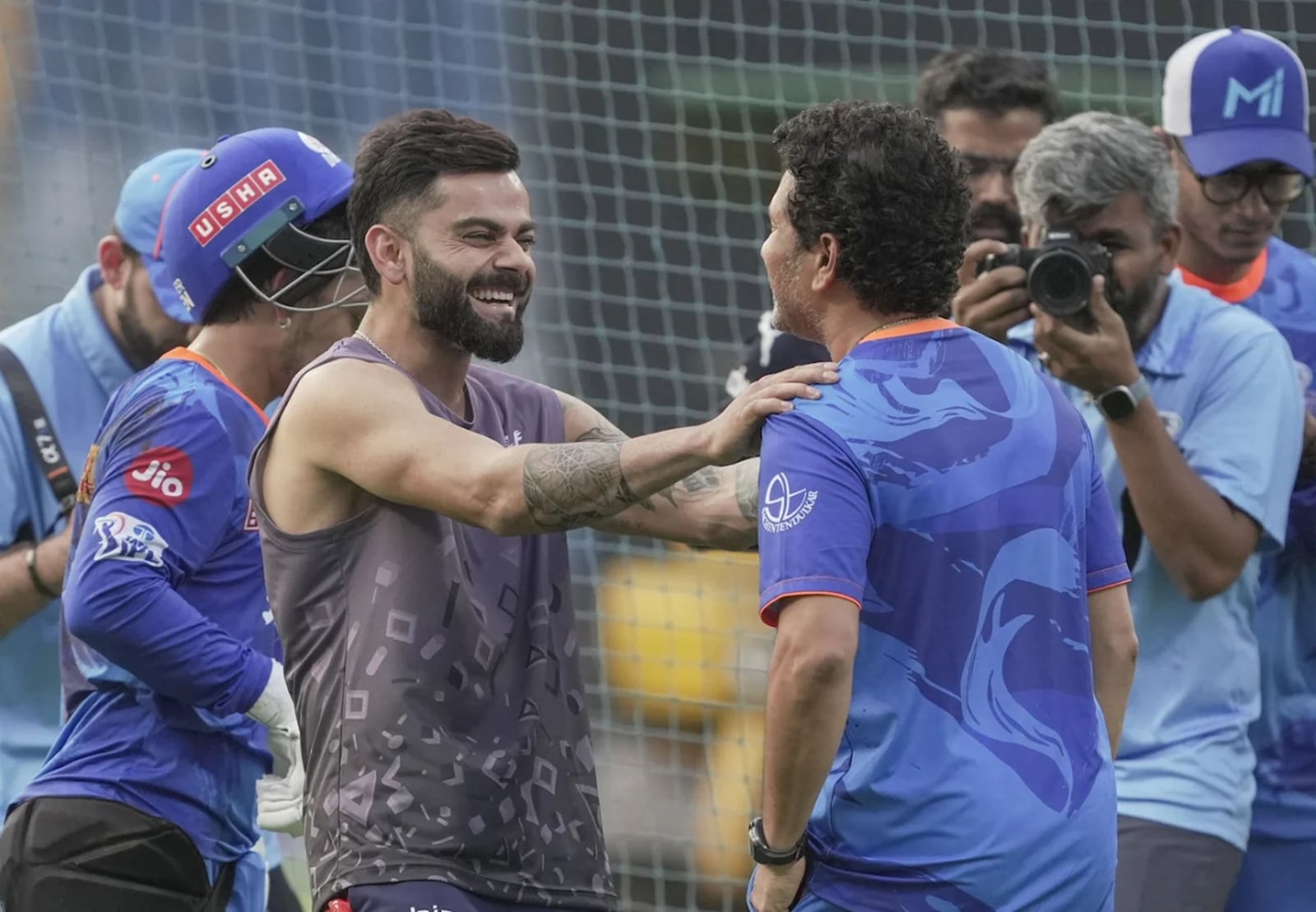 Virat Kohli has spoken in the past about how a chat with Tendulkar helped him recover from a disastrous tour of England in 2014. (PTI Photo)
* * *
Story continues below this ad
What Tendulkar loves to talk about is cricket’s complexities. It is when he is most comfortable and articulate — sharing priceless observations that the rest of the world is either blind to or didn’t know existed.
A problem-solver all his life, Tendulkar loves a cricket riddle. Like a scientist excited by the fresh challenge a mystical universe throws up, his mind buzzes while untangling a cricketing puzzle — mining the archival data stored inside him over a lifetime, since the time Achrekar Sir put a coin on his stump.
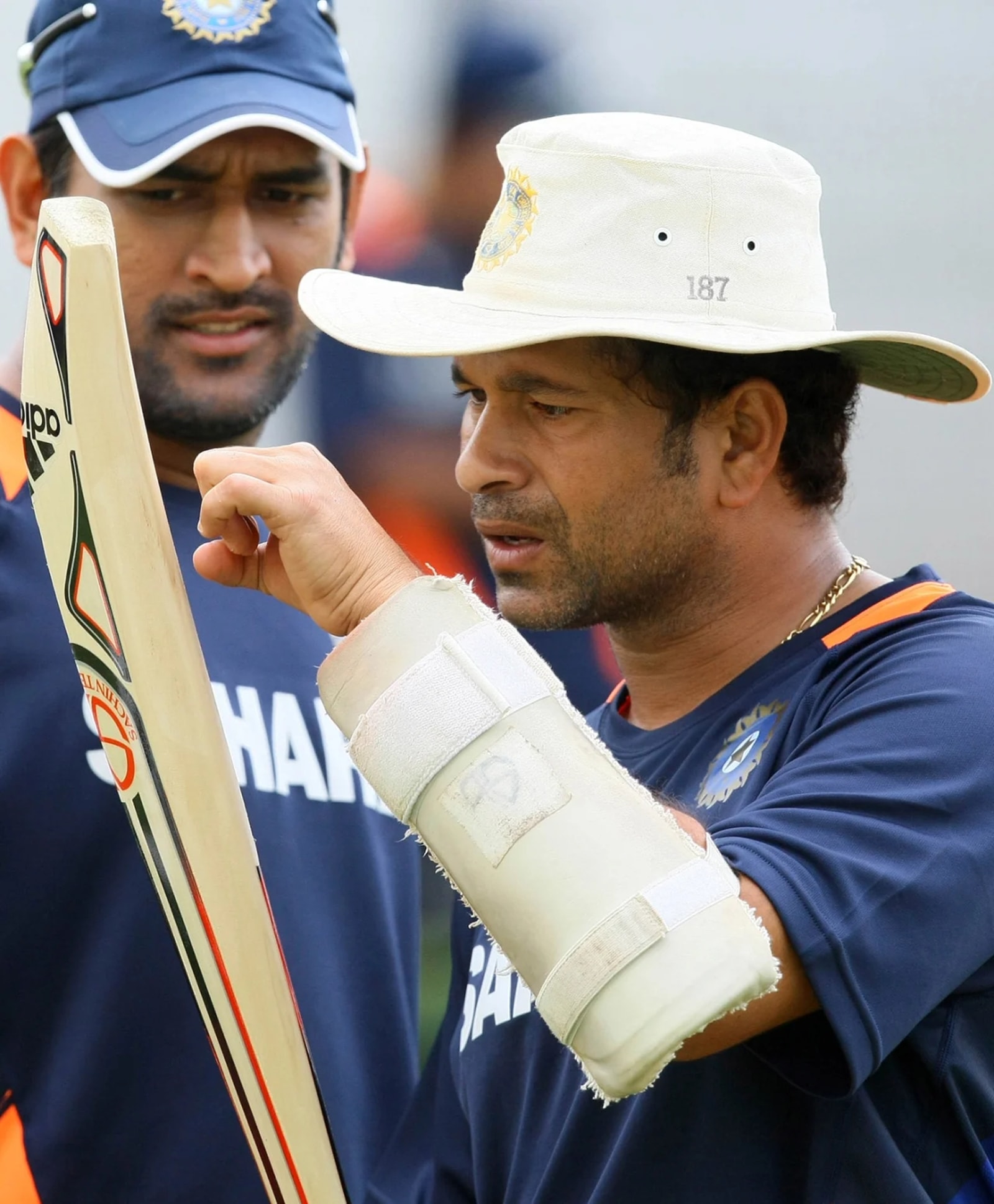 What Tendulkar loves to talk about is cricket’s complexities. (AP Photo)
Once, in an interview with this newspaper, he spoke for close to an hour about running between the wickets — before a tour to Australia, where the grounds were large and run-making wasn’t going to be about boundaries. Because of the hard pitches Down Under, he preferred sharper spikes, like those used by sprinters. Before games he would sharpen them to stay on firm footing and avoid slipping. He also advocated cradling the bat — letting it hang below the waist would come in the way of fast-moving legs. And to always say ‘yes’ or ‘no’ when calling, never ‘go’, which could be mistaken for a ‘no’.
Before another England tour, he opened up about overhead conditions — a much-neglected but important factor. On overcast, gloomy days the ball hops around and the priority is survival — play the waiting game, since it would be a new game at restart. After rain, a couple of drives along the ground is all a batsman needs to gain the edge, because umpires wanting players back on field quickly ensure only the central square is dried, leaving the outfield moist. “The moment the ball starts to travel to deep square-leg, third man, fine leg and deep point, it starts getting wet and stops moving. You try to make sure the ball gets outside the 30-yard circle,” he said.
* * *
Story continues below this ad
Indian cricket folklore has many such Birbal-like Tendulkar moments — the quick-thinking hero outwitting the opposition. Administrator and writer Amrit Mathur, in his book Pitchside, describes a recce trip to Centurion the day before the India-Pakistan game at the 2003 World Cup. As they walked along the outfield, Tendulkar stopped to stare at the grass. The blades, he told Mathur, were facing the central square — so a ball played along the ground to third man would travel slowly, making singles and doubles easy to run. On a cricket ground, nothing escaped him, not even the angle at which a blade of grass was bent.
Till his final days of active cricket, a quarter-century long journey, Tendulkar never stopped plotting. Playing his last domestic game against Haryana at Lahli’s green track, he didn’t treat it as a mere farewell. At a crucial point in the game, with Mumbai to bat in the second innings, he asked captain Zaheer Khan not to take the roller — surprising even the Haryana players. After the game he explained. Lahli has a very high water table. The weight of the roller would bring moisture to the surface, helping the pacers.
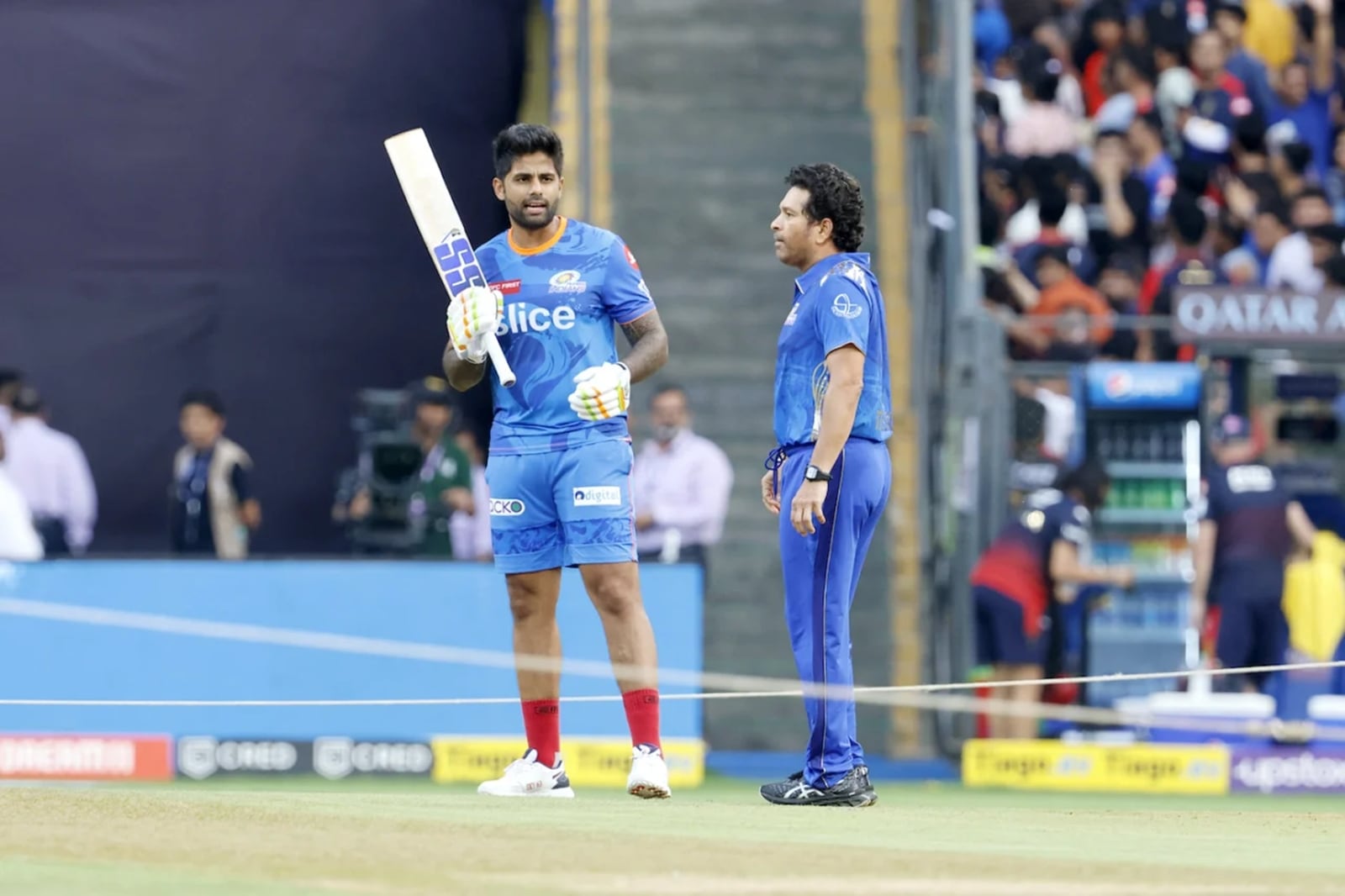 Suryakumar Yadav with Sachin Tendulkar before a match during the 2023 season of the IPL. (BCCI Photo)
* * *
Tendulkar, unlike many greats, shares his secrets — with modest domestic players from Haryana, present-day greats like Kohli and Gill, even reporters with genuine questions. Everyone gets his time.
Story continues below this ad
Once, in the middle of a run drought, he called room service for coffee. The waiter who knocked was a Tendulkar-watcher — he had spent hours studying the great man’s innings in slow motion. He asked permission to share an observation. Tendulkar allowed. “The arm guard you wear is too long,” the waiter said. “It hampers your hand movement at the elbow.”
The man who received a thousand suggestions a day thought about it. He saw merit in what the waiter said. He reshaped the arm guard. Within days, he was back among runs.
It’s only a clear beautiful mind that first soaks every bit of wisdom it can and shares it with those in need.


