


Vidit Gujrathi explains the Indian contingent’s mixed feelings after the Chess Olympiad where the two teams could not defend their gold medals from Budapest 2024. The contingent returned from Samarkand with a glut of medals and accolades: silver in the open section, bronze in the women’s event, the Nona Gaprindashvili Cup given for the best side overall, individual medals for six out of the 10 players, including a gold for Savitha Shri.
But what the Indians really craved were the ones that Uzbekistan (open section) and China (women’s section) pocketed.
Both the Indian teams lost once over 11 rounds, the men to the hosts and the women to old nemesis Poland. The women did well to hold title rivals like China, Kazakhstan, and Georgia to draws. The men, on the other hand, will be sore about being held to a tied score by Azerbaijan and Hungary.
“The last Olympiad was so special that we created an unrealistic benchmark. Results like those from Budapest — where you don’t lose a single match and claim the title with a round to spare — will probably not be achieved in many Olympiads. It’s never happened before. That’s why this silver was not a big cause of celebration. But we are proud of the silver because it was not an easy Olympiad,” reasons Vidit.
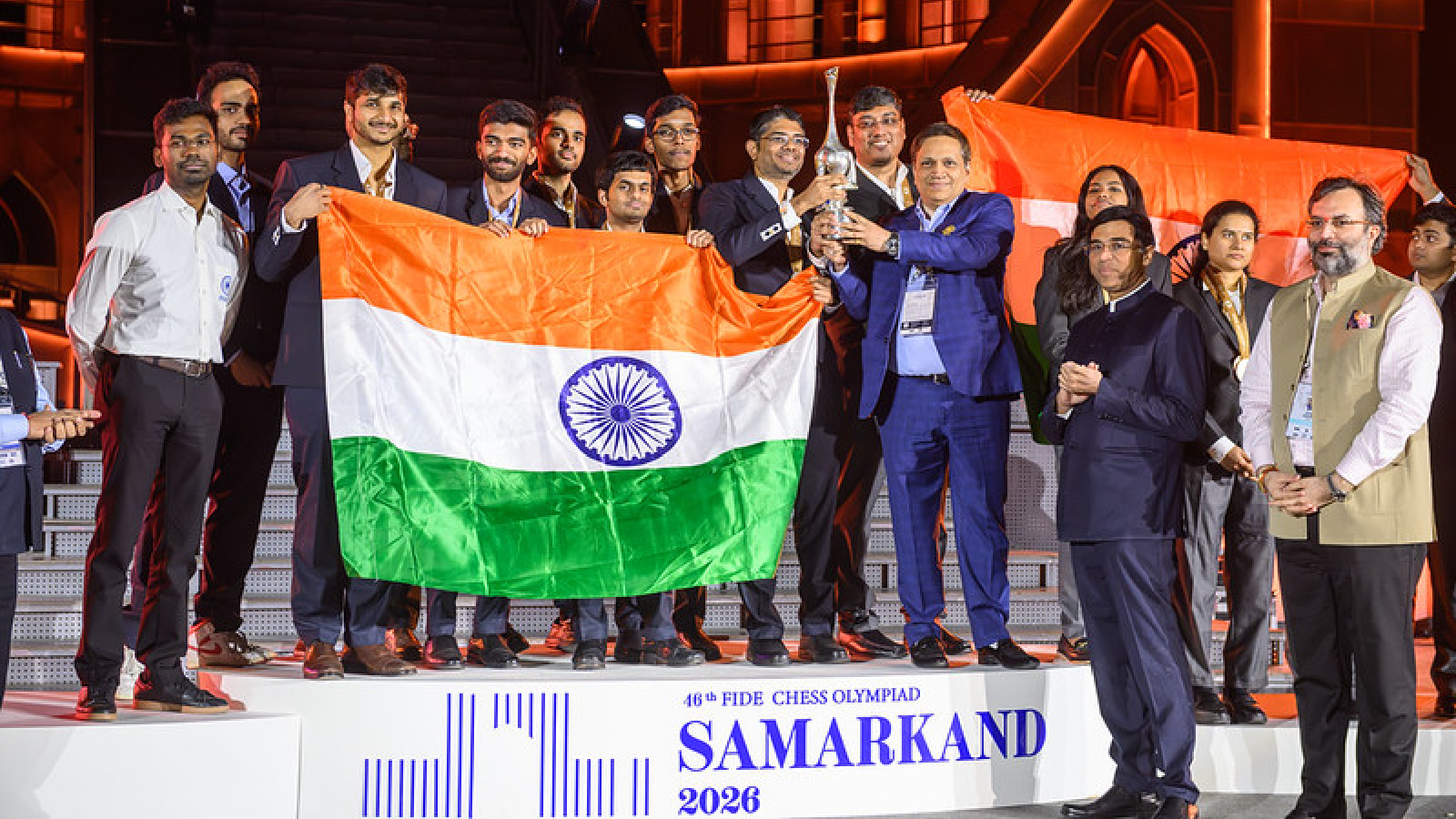 Both the Indian teams lost once over 11 rounds, the men to the hosts and the women to old nemesis Poland. (Michal Walusza / FIDE)
The three members of the coaching staff and one player that The Indian Express spoke to indicated the feeling in the Indian camp that winning both sections was well within their reach.
“There were misses from us. That’s undeniable. But we want to be slightly careful micro-analysing these mistakes because that’s just how games at an Olympiad go,” says Vaibhav Suri, who was part of the coaching set-up of the open section team. “In 2024, it was super clean. Every person was in really good shape. We were taking every chance we were getting. This time, it was a little dicey. There were situations where evidence showed that not everyone was in their best shape. Pragg was missing some wins. Arjun missed a few too. Nihal lost against the Uzbeks. Gukesh also missed once (in the final round).”
Story continues below this ad
Playing on the top board, the Indian open team’s in-form player coming into the Olympiad, R Praggnanandhaa racked up three wins while losing none. On board 2, Arjun Erigaisi had two wins in 10 rounds and a defeat. On the third board, Nihal Sarin had four wins and two defeats. The surprise element for India was on board 4, with world champion D Gukesh, who until his final round defeat, had seven wins in 10 rounds without losing. Vidit played just three games, winning one and drawing two.
Team captain Srinath Narayanan explained that the team’s strategy was to squeeze opponents in the last two boards.
“With most teams having a pretty strong 1 and 2, boards 3 and 4 were generally where we wanted to put maximum pressure. In a lot of cases, it felt nice to have Nihal and Gukesh exerting that pressure,” says Srinath.
Similar story
In the women’s section too, the team relied on wins from their third and fourth boards via Vantika Agrawal (five wins, one loss in eight games) and the previously unheralded Savitha Shri, who turned out to be a sledgehammer of a player winning eight games and drawing two.
Story continues below this ad
On the top boards, Koneru Humpy proved to be a reliable campaigner with four wins and no defeats in 10 games. But R Vaishali’s form was a concern, with her winning just her first round clash before enduring three draws and two defeats. She did not play in the final three rounds.
Divya Deshmukh (four wins and a loss in 10 rounds) deputed for her on board 2 in five of the 11 rounds.
Swayams Mishra, the captain for the women’s team, points out the fine margins that decided the colour of the medals. “We had a good chance of beating China (in the penultimate round) and things would have been very different. Kazakhstan was losing in that round but won with a miracle. That changed everything, in terms of the pairing in the final round as well,” he says, adding that the players were “drained out physically, psychologically and emotionally.”
There was an unprecedented amount of criticism too on social media.
Story continues below this ad
“India has developed as a chess-playing nation in the last few years. The amount of criticism the players and coaches received was unbelievable. But I see this as fans having big expectations from us.”


