


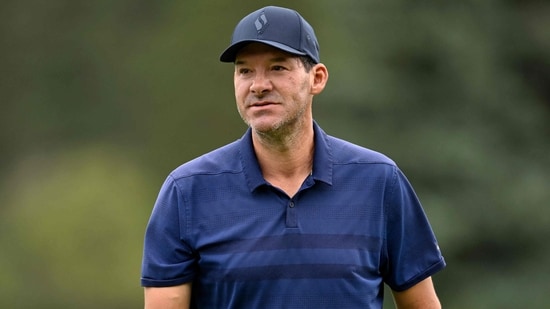
Former Dallas Cowboys quarterback and current CBS Sports analyst Tony Romo was arrested Thursday evening on suspicion of Operating While Intoxicated (OWI), according to the Milwaukee County Sheriff’s Office.
An OWI charge alleges that a person operated or had control of a vehicle while under the influence of alcohol or drugs.
According to a detention report obtained by Fox 6, Romo was taken into custody after he reportedly did not successfully complete a series of standard field sobriety tests.
When was Romo arrested?
The 46-year-old was booked into custody at 9:47 p.m. on July 23, 2026, before being released at 11:01 p.m. under a book-and-release procedure.
According to ABC affiliate WAOW, Romo was pulled over while driving southbound on Interstate 43.
A court appearance has been scheduled for September 21 at 8:30 a.m.
OWI charge explained
The potential penalties for an OWI conviction vary depending on the jurisdiction and whether it is a first or repeat offense.
According to Davey & Goldman Law article, under Wisconsin law, a first-offense OWI is generally treated as a civil violation.
A conviction can result in the suspension of driving privileges, financial penalties, and the possible installation of an ignition interlock device. Drivers are typically eligible to apply for an occupational license immediately after a first offense.
The law firm notes that penalties become significantly more severe for a second or subsequent OWI conviction in Wisconsin, including jail time, license revocation, additional fines, and mandatory use of an ignition interlock device.
Separately, a Scrofano Law article explains that in Washington, D.C., an OWI is a criminal offense involving the operation or control of a vehicle while impaired by alcohol or drugs. A person may face charges even if the vehicle is not moving, provided authorities determine they were in a position to control it.
Potential outcomes in Romo’s case
If convicted, Romo has 30 days to challenge the mandatory suspension of his driving privileges, which could range from six to nine months.
Because he is believed to hold a Texas driver’s license as a longtime resident of the Dallas area, where he spent all 13 seasons of his NFL career with the Cowboys, the Wisconsin case could also trigger administrative consequences in Texas.
For a first-offense OWI in Wisconsin, the expected penalties generally include a fine ranging from $150 to $300, court costs, and an alcohol and drug assessment. In addition, Texas authorities may choose to suspend or take reciprocal action against his driver’s license based on the Wisconsin offense.


