


The confidence in Uttam Mohanty’s voice is unmistakable. As Jharkhand’s throwdown specialist, he doesn’t just observe Ishan Kishan’s shots—he knows them by sound alone. During the Syed Mushtaq Ali Trophy final in Pune, when Kishan launched one high into the air, his teammates in the dugout tensed.
“Catch na ho jaye,” they muttered nervously.
But Mohanty knew better. “Yeh six hai,” he declared.
The ball sailed over the boundary. His teammates stared in disbelief. How could he be so certain?
“The sound from the bat rings in my ears,” Mohanty explains. “Itna practice kiye hai sath mein. The timing was so sweet—I knew it would go for six.”
This is the world behind the spotlight, where invisible hands shape visible success.
Three hours in nets
For the past two seasons, Mohanty has been the constant presence in the adjacent nets whenever Kishan walks in. Every session comes with specific plans. The longest throwdown sessions stretch to three hours. Before every game, forty-five minutes minimum.
In recent years, Kishan identified a gap in his game—his flat strokes through cover and point weren’t as commanding as his leg-side prowess. One day, he approached Mohanty with a request.
“He showed me the spot and told me to bowl at as much pace as I can,” Mohanty recalls. “He practiced it for hours. Ishan’s leg side is strong—he can pick the ball from middle and dispatch it with ease. But off-side, he wanted to master it.”
Story continues below this ad
ALSO READ | Quick Comment: Ishan Kishan or Sanju Samson in playing XI is no longer a debate
The transformation didn’t happen overnight. It happened ball by ball, session by session, with a throwdown specialist who refused to let his kitbag be carried.
“Once after practice, I took his kitbag to the dressing room,” Mohanty remembers. “He straight away said, ‘Bhai, mein apna saaman khud leke jaoonga, yeh aapka kaam nahi hai.’ He never threw any tantrum.”
The longest two years
It’s been more than two years since Ishan Kishan was dropped from the BCCI’s annual contract. His crime? Asking for a break from Test cricket during the South Africa tour, citing mental fatigue. The punishment was swift—no contract, no India call-up, and a mandate to return to domestic cricket.
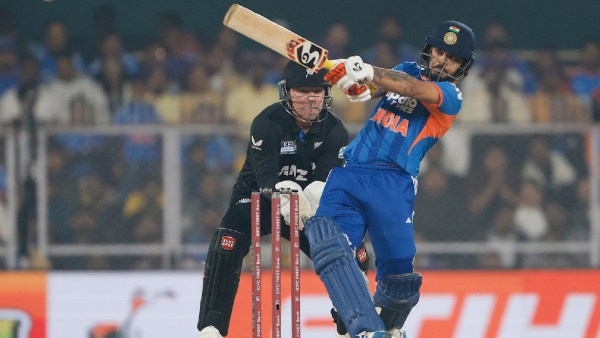 Ishan Kishan of India plays a shot during the 3rd T20I match between India and New Zealand at ACA Stadium, Guwahati, India, on January 25, 2026. (CREIMAS for BCCI)
In Patna, his childhood friends Siddhant Singh and Anshumat Srivastav watched as Ishan processed what had happened. He took some time, then began charting his comeback. He worked harder than before, never skipped sessions, even constructed a pitch in his backyard for practice.
Story continues below this ad
To outsiders, Ishan showed no signs of desperation. But those closest to him noticed the bedroom light burning warmer and longer than before.
“Those two years were tough—not only for Ishan but his family too,” says Siddhant. “What he had asked for was just a break, a mental break. It’s tough to warm benches, and it seems a time came where he said, ‘I need a break from this,’ and people took it otherwise.”
Anshumat is more direct about the narrative that formed around his friend. “He was easily labelled as someone who doesn’t take playing for India seriously. People didn’t understand that. They kept saying things. But this guy—I’ve never seen anyone that mentally locked in.”
The bubble of brotherhood
Ishan decided to focus on what he could control. He hired a dietician, intensified his fitness regimen, and opened the Ishan Kishan Academy in Patna with Anshumat. The academy gave him a base to prepare and a purpose beyond his own comeback—mentoring the next generation.
Story continues below this ad
He also turned spiritual. Siddhant reveals that during those difficult times, Ishan drew closer to God. His kit bag now carries a photo of Sai Baba and a copy of the Bhagavad Gita.
For someone who has been in the limelight since age 14—when crowds would gather to watch him bat at grounds near his home—the scrutiny was nothing new. But his friends noticed a shift. The Ishan of 2024 is different from the one of 2019. More grounded. More purposeful.
“He understands relationships and he will go all out for his friends,” Siddhant explains. “When we went to see his domestic game, he ensured we got seats in the president’s box. We were made to sit somewhere else, but he told the manager to make sure we got the best seats.”
During one IPL season, Anshumat’s dog passed away. Despite the demands of the tournament, Ishan made sure his friend wasn’t alone.
Story continues below this ad
The friends have become his protective bubble, filtering out noise and negativity. At home in Patna, conversations revolve around laughter and memories, not cricket politics. And whenever Ishan returns from a series, he arrives at his academy with a loaded bag—clothes, bats, gloves—all destined for young cricketers who dream of following his path.
Siddhant and Anshumat knew Ishan before he was a cricketer—just a small boy who played well. When Delhi Public School told him to choose between cricket and studies, his family chose cricket. Even then, his friends remember, Ishan would stand up to bullies who targeted juniors. Leadership qualities the cricketing world hasn’t fully witnessed yet.
“He has all the qualities to become a great leader,” says Anshumat.
As Ishan prepares for the New Zealand series, his friends are confident about what’s coming. “People will see a different Ishan,” Siddhant predicts. “This will be redemption time for him.”
Story continues below this ad
Siddhant jokes that when a biography is eventually written about the wicketkeeper-batsman, these two years will be the perfect plot for his second innings.
But perhaps the real story isn’t just about Ishan’s comeback. It’s about the throwdown specialist who knows a six by sound, and the childhood friends who kept the light on during the darkest hours—the invisible faces who help make sporting greatness visible.