


Heading into the Glasgow Commonwealth Games, India had two streaks to protect: a top-five finish and at least 50 medals, benchmarks the country had maintained at every edition since 2002. At a heavily downsized Games, where several of India’s strongest medal-winning sports were absent, both goals looked under serious threat.
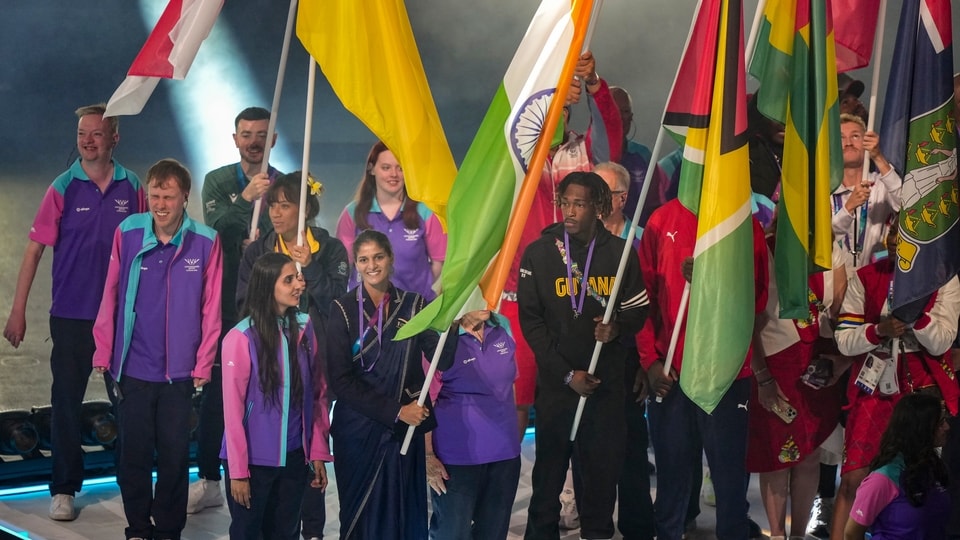
When the curtain came down after 11 days of competition, India returned with 39 medals (13 gold, 17 silver, 9 bronze) and finished fourth in the medals table. The top-five streak survived, but the 50-medal run did not. On paper, it looked like a step backwards from Birmingham’s 61 medals four years ago. The numbers, however, tell a different story.
India sent 122 athletes to Glasgow compared to 210 in Birmingham. As many as 31 per cent of the contingent returned with medals, marginally better than Birmingham’s conversion rate of 29 per cent. The campaign was smaller, expectations were lower and medal opportunities fewer. Yet Glasgow still offered valuable clues about where Indian sport stands four years before hosting the Commonwealth Games in Ahmedabad.
A stronger athlete pipeline is beginning to emerge
Perhaps the biggest takeaway from Glasgow was not the medal tally, but the emergence of a broader group of athletes capable of winning consistently.
Athletics improved despite fielding a smaller contingent. India won 10 medals, five silver and five bronze, from 32 athletes, compared to eight medals from a 37-member squad in Birmingham.
Neeraj Chopra missed out on a second Commonwealth Games gold, but his silver perhaps carried a bigger message. Years of excellence have inspired the next generation, reflected in Yash Vir Singh joining him on the javelin podium. Tejaswin Shankar battled injury to become India’s first Commonwealth Games decathlon medallist, while Gulveer Singh scripted history by becoming the first Indian athlete to win two medals in a single edition.
The boxers raised the bar even higher. India produced the greatest boxing campaign by any nation in Commonwealth Games history, winning seven gold and three silver medals. Young names such as Jaismine Lamboria, Preeti Pawar, Priya Ghanghas, Sachin Siwach and Ankush Panghal justified the faith shown in them.
The caveat remains obvious. Glasgow did not feature the strongest boxing nations. The real examination begins next month at the Asian Games, where Uzbekistan, Kazakhstan, China and other continental heavyweights return. Glasgow established India’s progress. Nagoya will determine how real that progress is.
Judo also enjoyed its finest-ever Commonwealth Games campaign, delivering India’s first gold medals in the sport through Asmita Dey and Harsh Singh, while Yamini Mourya and Unnati Sharma completed a four-medal haul.
The competition may not have matched Olympic standards, but breakthroughs rarely come with caveats. Glasgow could prove to be the moment that changes Indian judo’s trajectory.
No contingent, however, made a bigger statement than India’s para athletes. Quietly operating away from the spotlight, the 28-member squad returned with seven medals, three gold, two silver and two bronze, matching India’s combined para-sports medal tally from every previous Commonwealth Games edition while surpassing it comfortably in quality. Three double podium finishes in para athletics underlined just how rapidly Indian para sport is evolving.
Governance remains India’s toughest opponent
If Glasgow celebrated India’s athletes, it also exposed the administrative issues that continue to limit Indian sport.
Weightlifting suffered the biggest blow before competition even began.
Four national campers failed doping tests during the qualification period, forcing them out of the Games. Under Commonwealth Games regulations, India also lost a quota place, denying Dilbagh Singh selection despite qualifying on merit. The original 16-member squad was eventually reduced to 11.
Judo, too, lost two selected athletes to doping-related suspensions.
Elsewhere, familiar governance failures resurfaced. Para swimming travelled with an incomplete squad because of documentation issues. Para cyclist Lisha Das competed without adequate equipment and support. Track cycling once again highlighted India’s infrastructural shortcomings, while gymnastics found itself under scrutiny after Pranati Nayak competed despite carrying an injury.
Success still depends on too few sports
Another reality that emerged from Glasgow was that India’s medal haul remained heavily concentrated. Boxing, athletics, weightlifting, para athletics and judo accounted for the overwhelming majority of the medals. Beyond those disciplines, returns were minimal.
Swimming again failed to bridge the gap with Australia’s elite. Gymnastics remains a work in progress. Track cycling continues to lag behind international standards. India’s historic women’s wheelchair basketball team gained valuable exposure but was never realistically in medal contention.
Lawn bowls, after the highs of Birmingham, became a story of near misses and heartbreak.
Ahmedabad 2030 offers the next leap
India will host the Commonwealth Games again in 2030, with Ahmedabad staging the centenary edition.
Table tennis has already returned to the programme, while cricket and hockey remain strong contenders for inclusion. If those sports make the final roster, India’s medal ceiling will immediately rise.
But adding sports alone will not guarantee success. Glasgow showed that India now possesses a stronger pipeline of athletes capable of competing consistently across disciplines. It also showed that governance remains the country’s biggest weakness.
Ahmedabad offers India the chance to do more than host another successful Commonwealth Games. It offers an opportunity to build a sporting system worthy of the athletes who have already shown they belong on the biggest stage.


