


UEFA is preparing to commission an independent valuation of FIFA’s abandoned World Cup investment proposal as it intensifies its challenge to Gianni Infantino’s leadership and examines whether the governing body was prepared to sell its future commercial profits below their true market value.
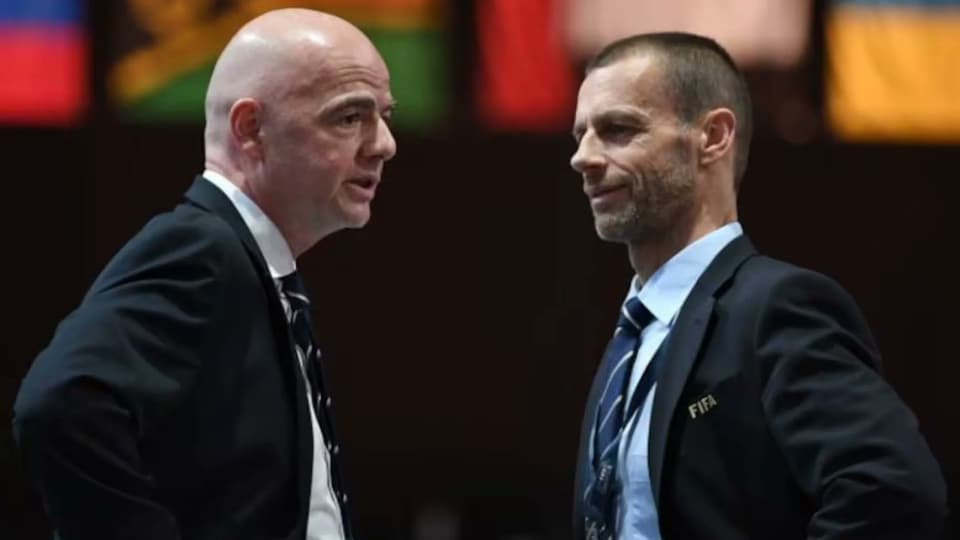
The European governing body remains dissatisfied despite Infantino issuing a written apology to FIFA’s 211 member associations following crisis talks in Morocco. UEFA is expected to continue pushing for his removal while subjecting the failed FIFA Forward Enterprise project to greater financial and governance scrutiny.
Under the proposal, FIFA planned to sell a 21 per cent stake in a new commercial entity to a group of investors led by Thrive Capital for $4.2 billion. The deal valued the operation, which would have controlled significant portions of FIFA’s commercial and tournament business, at approximately $20 billion.
Thrive Capital is headed by Joshua Kushner, the brother of Jared Kushner, who is married to Donald Trump’s daughter Ivanka Trump. UEFA played a decisive role in forcing FIFA to abandon the plan within four days. All 55 of its member associations threatened to boycott the World Cup and other FIFA competitions if the proposal proceeded.
The focus has now shifted from preventing the sale to examining how FIFA arrived at its valuation and whether the organisation followed a transparent and competitive process before entering discussions with private investors.
UEFA questions $20bn valuation
UEFA has reportedly consulted several market analysts and is likely to order a formal independent study once the immediate political crisis surrounding Infantino has eased. The sales presentation circulated by FIFA last week did not contain a detailed explanation of the valuation process or evidence that the proposed stake had been offered through a competitive tender.
A source with knowledge of UEFA’s plans told The Guardian: “We need to find out if they were selling the World Cup at a knockdown price. How did they get to $20bn? Was it a robust process?” FIFA generated revenues of around $15 billion during the four-year cycle culminating in this summer’s World Cup. That has led analysts to question whether valuing the new entity at only $5 billion more than the organisation’s current cycle revenue adequately reflected the long-term earning power of FIFA’s competitions.
“The World Cup is the only genuinely global mass entertainment event, so an increase of $5bn on current revenues seems low to me,” the source said. “This looks like a low-ball offer. The obvious financial upside of further expansion that the investors would demand – more teams, more regular World Cups, more Club World Cups – is not priced in.”
The absence of restrictions preventing further expansion has also raised concerns that private investors could have pushed FIFA towards creating additional competitions or enlarging existing tournaments to increase commercial returns.
Also Read: Infantino and FIFA release apology letter after private investment backlash
UEFA has called for a wider examination of FIFA’s governance and has also raised the possibility of legal action. The controversy has exposed significant internal opposition to Infantino, with senior FIFA figures including secretary general Mattias Grafström, chief operating officer Kevin Lamour and chief of global football development Arsène Wenger criticising the handling of the proposal.
Infantino subsequently acknowledged in his apology that the project had been “a mistake”. FIFA has nevertheless attempted to present a united front. After the Morocco talks, Infantino appeared alongside Grafström at a Women’s Africa Cup of Nations match before FIFA released a statement declaring that its president continued to enjoy the organisation’s “full support”.
That declaration may have brought an end to public dissent from inside FIFA, but it has not halted the external campaign against Infantino. UEFA’s proposed valuation could now determine whether the World Cup sale was merely poorly handled or represented an attempt to surrender one of sport’s most valuable commercial assets at a heavily discounted price.