


Kerala’s Kurian Jacob, at 76, is proving that age is no barrier to chasing big dreams. The Masters swimmer has become an inspiration for people across the country with his relentless drive and passion for fitness, redefining what healthy ageing and sporting excellence can look like in India. Although he began competing only in 2019, swimming has been part of his life since childhood. Growing up in a house near a river, Kurian says he learned to swim even before he learned to walk. After returning to India from an overseas banking career at age 67, he decided retirement was not for him. Instead, he chose to pursue something he truly loved.
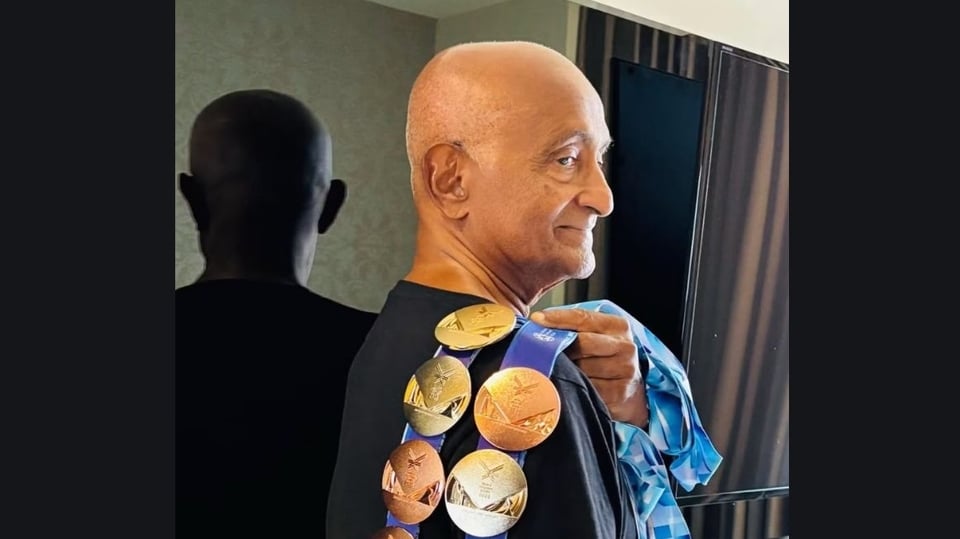
That decision has transformed his life. Kurian, who is a WalkAbout Athlete, has since established himself as one of India’s finest Masters swimmers, winning multiple international medals, including nine at the World Masters Games in Taiwan, where he claimed two gold medals, along with podium finishes at the European Masters Championships. Now, he has set his sights on breaking a world record in the 75-80 age category at the upcoming World Masters Games in Japan. In an exclusive interview with Hindustan Times Digital, Kurian spoke about the turning point in his life, the lifestyle changes that helped him succeed, and the mindset that continues to motivate him and inspire others to stay active, regardless of age.
Here are the excerpts from the interview:
You took up competitive swimming after retiring from your banking career. At what age did you retire? What inspired you to take that leap?
“Actually, I came back from working overseas in 2017. For some reason, I don’t like the word ‘retirement’. I was looking for ways to stay active. That’s when I started intermittent fasting, and today I even mentor about 70 people on it. I also developed an interest in kombucha and fermented foods because I’ve always been passionate about wellness. Then, in 2019, some of my college friends invited me to a state Masters competition. They remembered me as a childhood river swimmer. I had never competed before, even though I’d been swimming since I was a child. In fact, I often say I probably learned to swim before I learned to walk because my house was near a river. I went to the state meet in Thiruvananthapuram and won a few medals, which was a huge thrill. That qualified me for the national championships in Baroda, where I didn’t win anything. But I’m very competitive, and that only motivated me to work harder.
Soon after, COVID-19 halted everything for nearly a year and a half. The pools were shut, so I tried training on land, but without the buoyancy of water, I picked up a sprain. I recovered and kept going. That’s how my competitive swimming journey began in 2019, and there has been no looking back since.”
Did you ever imagine it would eventually lead to representing India on the international stage?
“No, not at that time. The state meet happened almost by accident. I did well there, went to the nationals and didn’t win anything. That made me even more determined. I started watching YouTube videos to improve my technique, worked harder, and eventually began winning gold medals at the national level. That’s when I thought, ‘Why not compete internationally?’ That’s how my international journey began in 2023, and since then, I’ve been competing overseas every year.”
You’ve won medals for India at major international events. Which moment has stayed with you the most, and why?
“If I had to pick two special moments, the first would be the 2023 Masters meet in Finland. I went there hoping to win at least a bronze medal, but I came back with five medals, three silver and two bronze. Even without a gold, that was a special moment because it made me feel like an international athlete.
The second was the World Masters Games in Taipei, Taiwan, which is held once every four years, much like the Olympics. Around 25,000 athletes took part, and I won nine medals, two gold, three silver and four bronze, the highest medal tally by any Indian. The most memorable part was winning gold in the 3km open-water event in the South China Sea. It was my first open-water race outside India, and that made the achievement even more special.”
You’re now preparing to chase a world record in Japan. How has your preparation been, and do you approach this challenge differently from previous competitions?
“The world record is something personal. I always aim for the highest. I believe that if you aim high, even if you don’t reach the top, you’ll still go further than you otherwise would. In the back of my mind, I know a world record is probably impossible, but that dream keeps me motivated. The Olympian who holds the record has grown older, and so have I, but if I keep improving, maybe one day I can get close. That’s my ambition. I don’t recommend this approach to everyone because some people get disappointed if they don’t achieve their dream. I’m different. I’m happy as long as I improve on where I was before. That’s why I’m going to Japan with the world record in mind, even though I know there’s a 99.9% chance it won’t happen. That goal has completely changed my routine. I now train six days a week, sometimes seven, and swim at least three kilometres every day. A friend in Japan told me the competition will be much tougher because the hosts have invested heavily in training. I want to do even better because I don’t want to lose what I achieved in Taipei. I even started an Instagram countdown, ‘300 Days to Kansai’, to keep myself motivated every single day.”
Your training routine is as demanding as that of many younger athletes. What does a typical day look like for you, and how important are diet and recovery at this stage?
“That explains why I don’t like the word ‘retirement’. I feel I’ve simply started a new profession, and that’s swimming. My day begins with training. I swim three kilometres every morning in a fasted state, usually after 15 to 16 hours of fasting. I follow a coaching plan prepared by a friend I met in Taipei. He watched me swim when he visited in February, pointed out a few areas to improve and has been updating my training schedule every two weeks. After training, I break my fast and stick to minimally processed food. I also spend time creating Instagram Reels. It’s not just about the countdown to Kansai. I share techniques like Tai Chi walking, tapping and other wellness practices that have really helped my balance and overall health.
Balance becomes extremely important as you grow older, so I encourage people in my age group to work on it. Over time, I’ve built a community of followers from around the world. Even elderly people from Europe reach out for advice on these techniques because they’ve found them helpful. I’ve also been exploring EFT, or Emotional Freedom Techniques, which combines modern psychology with traditional acupressure. It’s something I enjoy learning and sharing. Between my training, wellness routines and interacting with people online, my days are full, and I’m enjoying every bit of it.”
Do you think enough is being done to support and recognise Master’s athletes in India? What changes would you like to see?
“I’m glad you asked that because it’s something I feel strongly about. One of my biggest concerns is the lack of recognition for Masters and senior athletes in India. I read the National Sports Policy released in July 2025, and despite going through all 25 pages, I couldn’t find a single mention of Master’s athletes. The focus is understandably on preparing young athletes for the 2036 Olympics, but seniors have been completely left out of support, infrastructure, and incentives.
The same concern remained when the Union Cabinet recently approved the Viksit Bharat 2047 sports roadmap, which has allocated significant funding to make India a top sporting nation. It’s an excellent initiative, but once again, there is no mention of senior athletes.
That’s why I’m grateful to be part of the WalkAbout Athlete Programme. It has given me a platform to raise this issue. I believe encouraging seniors to stay active isn’t just good for sport, it’s good for public health. Active ageing can reduce healthcare costs and improve quality of life, making it a worthwhile investment. While government support would be ideal, I also hope more corporations come forward through CSR initiatives to sponsor Master’s athletes. Travelling and competing are often more expensive for seniors, and financial support can make a huge difference. Women and para-athletes are rightly recognised in these policies, but senior athletes continue to be overlooked. There’s still a long way to go, and I hope that changes.”
If someone in their 50s, 60s or even 70s wants to start exercising but feels it’s too late, what would you tell them?
“My first advice would be to join WalkAbout. More importantly, just keep moving. If you’re not active at all, start slowly. If you’re already active, challenge yourself to do a little more every day. Many of us played sports when we were younger. My message is simple—don’t stop. Sportspeople never really retire. There are so many opportunities to compete, no matter your age. At the World Masters Games in Taipei, I saw a 104-year-old athlete run the 100 metres without any assistance. That was truly inspiring. So pick up a sport, or reconnect with your old friends and form a team. There are Master’s competitions where you can represent India. Above all, stay active. Just keep moving.”


