In his days of deep grief, Lionel Messi turned to football. Seven days after the death of his father, Jorge, three days after an emotional post on Instagram, even contemplating his retirement, Messi turned to the field that has defined him. The football pitch, where he entered clinging onto the index finger of Jorge, several years ago in his hometown Rosario.
He held his tears back, but pain wore heavily on his eyes. But as Inter Miami found a slice of inner peace that had deserted him in the last week or so. The night was undoubtedly frustrating, he missed a spot kick, a goal was ruled out and two strikes off single piece of action stung the post. But the game offered him a brief and fleeting reprieve from the greatest tragedy of his life. It’s where his great rival and contemporary Cristiano Ronaldo too took refuge when his son died in childbirth three years ago. He sent a short, touching message to Messi: “A huge hug to you and your loved ones during these difficult times, Leo. Stay strong.”

Perhaps the biggest tribute to his father was that he returned to play competitive football again, a dream that he had sowed despite the humble means of a factory worker in a metal firm. Jorge did not dream of becoming a footballer; he didn’t thrust unrealistic expectations on his son to become a footballer either. But he was Messi’s biggest inspiration. He stood by his son throughout his career, as a father when he needed the care of one, as an agent when he needed the guiding of one, as a friend when he needed the affection of one.
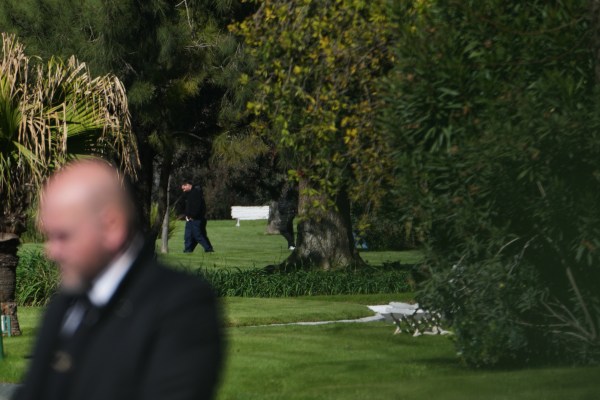 Messi, center, walks inside El Prado cemetery during the funeral of his father, Jorge Messi, in Rosario, Argentina, Sunday, Aug. 9, 2026. (AP Photo/Rodrigo Abd)
Workaholic father
His early footballing memories are inextricably linked with his father. He rarely saw him on weekdays. He left home at four in the morning and reached home by nine at night. He longed for weekends, when he used to take him to the games of Newell’s Old Boys, the local club. “We saw little of each other, and when we did see each other, he enjoyed my company. He never scolded me. I enjoyed him so much, I would wait for him just to hug him and be with him. He spent all his time working, honestly,” he once told TYC.
But as Messi grew, so did his father. A humble factory worker became the agent of the arguably the greatest ever footballer. He had no management degree; he was no expert in finances. But he simply knew what was best for his son. He learned the nuances on the go. When Barcelona deliberated on whether to take Messi or not to the academy, he breathed down their neck. He even threatened to walk away from the deal, forcing Barcelona’s sporting director at the time, Carles Rexach, to write a commitment on a paper napkin to sign Messi.
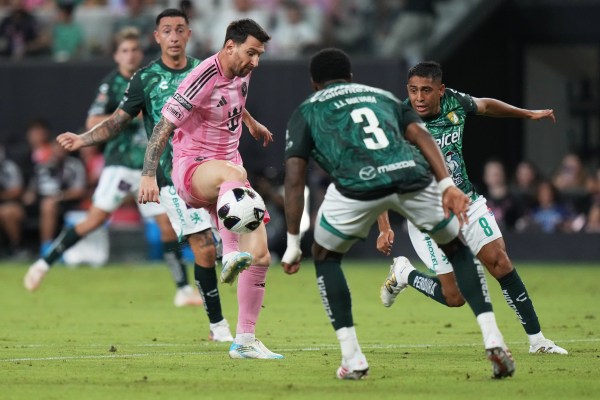 Messi in action during the second half of a Leagues Cup match on August 12, 2026, in Miami. (AP Photo/Lynne Sladky)
When his son became rich and famous, the father stayed away from limelight and vanity. In the early days of Messi’s career, he watched the game from the stands, as one of the crowd rather than from plush corporate boxes. He rarely gave interviews, but the Spanish media portrayed him as genial and pleasant, a warm smile playing on his face. Messi says his father instilled him with the values of humility. In a touching tribute, Messi wrote: “I’m going to miss you so much, but you will always be present, especially in the upbringing of my children, because I will teach them and raise them the way you raised me”
Tough times
The first time the world saw his father was during the training sessions at the La Masia Academy. He stayed back until his son adjusted to life in a faraway country and culture. Some days were tough, but Jorge was by his side. “Sometimes, I would shut myself in my room to cry alone, or he’d do the same, without me seeing him. We’d pretend we were both OK, but we weren’t. My old man asked me, ‘What do you want to do? Do you want to keep going or should we go back home?’ I wanted to keep going, and he stayed with me,” Messi once narrated the struggles to Radio Del Plata. “My old man was always by my side. We went through a lot of ugly things together,” he added.
He flew down to watch him in youth games, where he guided him from the stands. “I would try to get him to look over at me. I’d give him a sign, I’d try to give him a boost and I’d tell him to move. He would throw an arm gesture at me and would respond that I should leave him alone. But he would reconnect, and he’d do something marvellous with the ball,” Jorge told Ariel Senosiai, who wrote Messi, El Genio Completo.
‘Watching like a fan’
The visits became more frequent when Messi became a regular, and eventually the greatest of his era. “There were times when I watched the game like a fan, and not a father,” he told Senosiai. And there were times, Jorge was more than a father, but his “best friend.”
He valued his words more than anyone else’s. He was sick before the World Cup, but kept firing him up. “You always asked me to play in the last World Cup and a few days before it started was when you got worse,” he wrote. “It was the first time you weren’t going to be at a tournament … Every time a match ended, I would wait and hope for your message. That’s when I realised how real the situation was.”
The situation deteriorated after the World Cup, and Jorge left Messi on August 8, filling his heart with an eternal void. “I don’t know what I’m going to do without you. I don’t know how to move forward. I only played football and now I have quite a few doubts about whether I’m going to keep doing it for much longer,” he wrote. And in that moment of deep grief, he turned to football again.


