


For Rohit Sharma and Virat Kohli, the ODI series against New Zealand starting in Auckland on Wednesday comes at an important stage in the build-up to the 2027 ODI World Cup. The series could test them against a New Zealand attack that can trouble them in different ways.
The focus, therefore, is less on the conditions and more on the bowlers India’s two senior batsmen will face. Matt Henry is expected to lead the attack with the new ball, with Jacob Duffy likely to partner him. Kyle Jamieson and Blair Tickner bring height and bounce, while Nathan Smith gives New Zealand another seam option.

There is history between Rohit, Kohli and New Zealand’s quicks. Both were tested on India’s 2019 and 2020 ODI tours there. Rohit, in particular, has had problems when bowlers have kept it full around off stump and got the ball to move late. In the fifth ODI of the 2019 series at Wellington, Matt Henry bowled him with a delivery that moved away late and squared him up.
That does not mean Henry or the other New Zealand bowlers have an easy way of getting Rohit out. He can also unsettle them by taking them on. But it remains an area New Zealand can target, especially early in his innings. Henry’s ability to swing the new ball both ways could make the first few overs important.
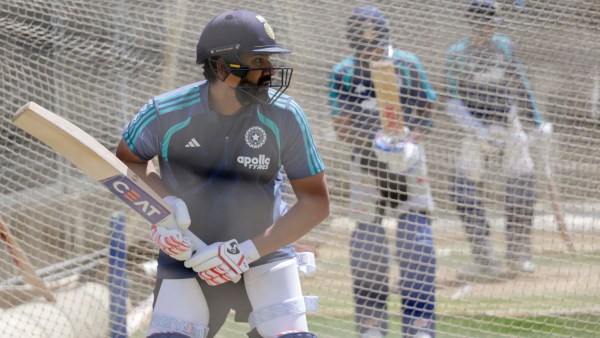 Rohit Sharma and Virat Kohli in action during practice session ahead of 1st ODI in Auckland. (CREIMAS)
Kohli’s challenge has been slightly different. New Zealand’s bowlers have often bowled in the fourth-stump channel, putting him in a spot over whether to play or leave. In the third ODI at Auckland in 2020, Tim Southee bowled a series of outswingers before going wide of the crease and bringing one back into Kohli. He fell over while trying to flick and was bowled. Southee is no longer around, but Henry has enough experience to take on that role. He will look to make Kohli play without giving him easy balls to drive. Henry and Duffy will have one job: make Rohit and Kohli play early, keep the runs down and avoid giving them an easy start.
Varied attack
Jamieson offers a different challenge. His height allows him to get extra bounce from a good length. He can also bowl across the right-hander and make him play from an awkward position. Against Kohli, that could bring the outside edge into play. Against Rohit, it could test him against a ball climbing from a good length.
ALSO READ | ‘Rohit and Kohli are still playing well’, says New Zealand captain Santner
Story continues below this ad
Tickner can give New Zealand a change of pace and length, while Smith can attack the stumps and the areas around the off stump. Together, the attack has enough variety to trouble even the best batsmen.
The challenge for Rohit and Kohli will be to understand the bowlers’ plans quickly and not allow them to settle. The current attack has some clues about how to dismiss them, but their experience could also help them deal with those plans.
The numbers suggest Kohli has generally been more comfortable in New Zealand, while Rohit has found scoring more difficult. Rohit has scored 437 runs in 14 ODIs in the country at an average of 36.41 and a strike rate of 72.95. He has four fifties but no hundreds. Kohli, meanwhile, has scored 596 runs in 13 ODIs at 49.66 and a strike rate of 91.41, with one hundred, which came on his first trip in 2014, and four fifties. But those figures are only part of the story. The bigger question is how New Zealand’s bowlers use what they know about these batsmen.
For India, getting through the new ball will be important. If Rohit and Kohli can get through Henry and Duffy, they can then look to put pressure back on the bowlers. If New Zealand can keep them quiet and force them to play shots outside their preferred areas, the pressure will be on India.
Story continues below this ad
The series is another chance for India to assess their senior batsmen with the 2027 World Cup approaching. Rohit and Kohli do not need to prove what they can offer to the side. What India will want to see is whether they can keep adapting as opposition attacks study them more closely.
New Zealand know where they can test Rohit and Kohli. The question is how well the two batsmen respond to those plans. Both have enough experience to deal with pressure, but New Zealand will look to keep them from settling in. If Rohit and Kohli can adapt quickly, it will give India another indication of how well their two senior batsmen can keep evolving as the 2027 World Cup gets closer.


