


Lionel Messi has retired from international football, and honestly, it is still difficult to believe. We all knew this day would come sooner or later, but watching Argentina without Messi in that jersey is something that will take time to sink in. Arguably, the greatest footballer the game has ever seen will no longer wear the Argentina colours.
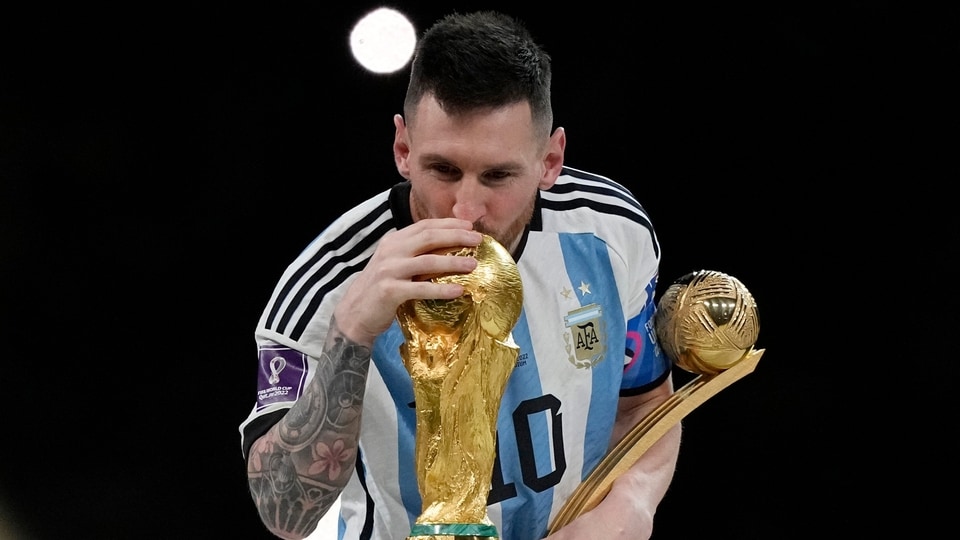
It wasn’t entirely shocking after the FIFA World Cup, but some goodbyes are just hard to accept. Messi has been part of football for as long as many of us can remember, redefining the game and giving fans moments they will never forget. The thought of Argentina stepping onto the pitch without him feels almost unreal.
His journey in the Argentina jersey may not have been the greatest in the eyes of everyone, but it was surely one of the most dramatic storylines international football has ever seen, one that not many could have imagined, let alone written.
Messi walks away with a World Cup, two Copa America titles, an Olympic gold medal and the Finalissima. But rewind six years, and the picture was completely different. He was constantly labelled an international failure despite taking Argentina to the 2014 World Cup final and several Copa America finals.
When you are spoken about among the greatest players ever, expectations are always different. Winning international trophies was the one thing Messi was repeatedly told he lacked. He answered that criticism in the most emphatic way possible. Now, he retires having literally completed football and, for many, finally settled the GOAT debate.
The 2014 World Cup final was perhaps the first real heartbreak of Messi’s international career. He came agonisingly close to achieving the one dream that had always remained out of reach, only to watch it slip away in the end. The next two years were even tougher. Argentina suffered back-to-back defeats in the Copa America finals, and the weight of those losses, along with constant scrutiny over his international record, eventually became too much. Branded by many as an international failure despite repeatedly taking Argentina to the biggest finals, Messi announced his retirement from international football in 2016. Thankfully for Argentina and football, he overturned that decision just a few months later.
Questions over his international legacy continued until 2021, when Messi finally lifted his first major trophy with Argentina by winning the Copa America. It was the breakthrough he had waited years for, and it paved the way for what would become the crowning achievement of his career.
Before the 2022 World Cup, one of the biggest criticisms aimed at Messi was his lack of goals in knockout matches on football’s biggest stage. In Qatar, he answered every doubt in the only way he knew how. Messi scored in the Round of 16, quarter-final, semi-final and final, becoming the first player in World Cup history to find the net in every knockout round of a single edition.
The triumph in Qatar put Messi in a category of his own. League titles, domestic cups, the UEFA Champions League, Copa America and finally the World Cup, there was hardly anything left for him to win. The international success he had chased for so long completed a career and a trophy cabinet that was already among the greatest football had ever seen.
However, Messi was in no mood to stop there. With the awareness that the end was getting closer, he seemed to simply enjoy his football with Argentina, while his teammates were willing to give everything they had on the pitch for him. He went on to win the 2024 Copa America, adding another major trophy to his collection, before his journey took him to yet another World Cup two years later.
The final act was one for ages
Many wondered if it would be the same Messi at 39, but he once again showed why age had never really mattered when it came to him. He put together a World Cup campaign to remember, making it clear to every young superstar on football’s biggest stage that as long as Messi was on the pitch, he was still the one to beat. He scored eight goals and provided four assists in seven matches, finishing just behind Kylian Mbappe in the tournament’s scoring charts.
He led Argentina to their third World Cup final, but it was a quiet night for Messi against Spain, and it was visible in Argentina’s performance, too. Without their talisman’s magic, they looked a level below Spain in almost every department. Messi walked off the pitch in tears after the defeat, but a few days later, an even more heartbreaking tragedy struck as he lost his father.
He had played the entire World Cup knowing his father was fighting for his life, and the emotions were visible on Messi’s face, particularly when he scored against Algeria, with his father clearly on his mind. Messi later revealed in his retirement note that he had written it two days after the final. But after his father’s death, it became clear that his journey in the Argentina colours had finally reached its end. He ended with 125 international goals, but his legacy in Argentine colours was much more than just numbers.
His journey in the Argentina colours has been a learning curve for everyone. The man who almost gave up after being constantly questioned and criticised for his efforts found the strength to fight back and eventually achieved everything there was for him to achieve with his country. He may have lost a World Cup final at the end, but there was acceptance this time, a feeling that perhaps the result didn’t matter as much anymore. And that is how Messi owned international football for close to two decades, with a magic that only he seemed to know.


