


Yogesh Mhatre will have a long Friday evening ahead. While his son Ayush leads India into the Under-19 World Cup final in Zimbabwe, he’ll be navigating the delicate dance of being in two places at once—physically present at a family ceremony in Virar, mentally chained to a cricket ground 4,000 miles away.
“We have a program at home, a one-time occasion—my nephew’s mundan ceremony,” Yogesh explains, his voice carrying the particular strain of competing devotions. It’s a religious ritual of shaving a child’s birth hair for the first time.
“As an uncle, I have an important role to play. So one hand will be performing the rituals, the other keeping an eye on the scores. The phone will be charged and ready.”
It’s the kind of juggling act that defines this moment for families across India—the collision of the sacred and the sporting, the intimate and the historic.
The favourite’s burden
India enters Friday’s final against England carrying the weight of expectation. It’s their sixth consecutive Under-19 World Cup final, a streak that has transformed hope into demand. They are the favorites, a label that both elevates and suffocates.
After India’s semifinal victory over Afghanistan, young captain Ayush Mhatre made a late-night video call home. More than 45 members of the extended Mhatre clan crowded around phones and screens, their faces glowing in the dark. They told him they’d never doubted India would chase down the total—the batting lineup was too strong, too deep.
But mostly, they asked the question Indian families have asked across generations, across continents, across every imaginable circumstance: “Did you eat?”
Story continues below this ad
Cricket talk, Yogesh admits, rarely dominates their conversations. “We don’t discuss tactics much. We ask, ‘How are you? What are your plans?’ The best part is when Ayush told us they’ve found an Indian family in Zimbabwe who delivers home-cooked food to the hotel. That sorted one of our biggest worries.”
Food. Sleep. Health. The mundane concerns that ground even the most extraordinary moments.
A different kind of preparation
In Zimbabwe, the Indian camp is deliberately not looking ahead. Coach VVS Laxman’s message is simple: stay present. The final will come soon enough.
But back in Navi Mumbai, the Kundu household has a different calendar in mind.
Story continues below this ad
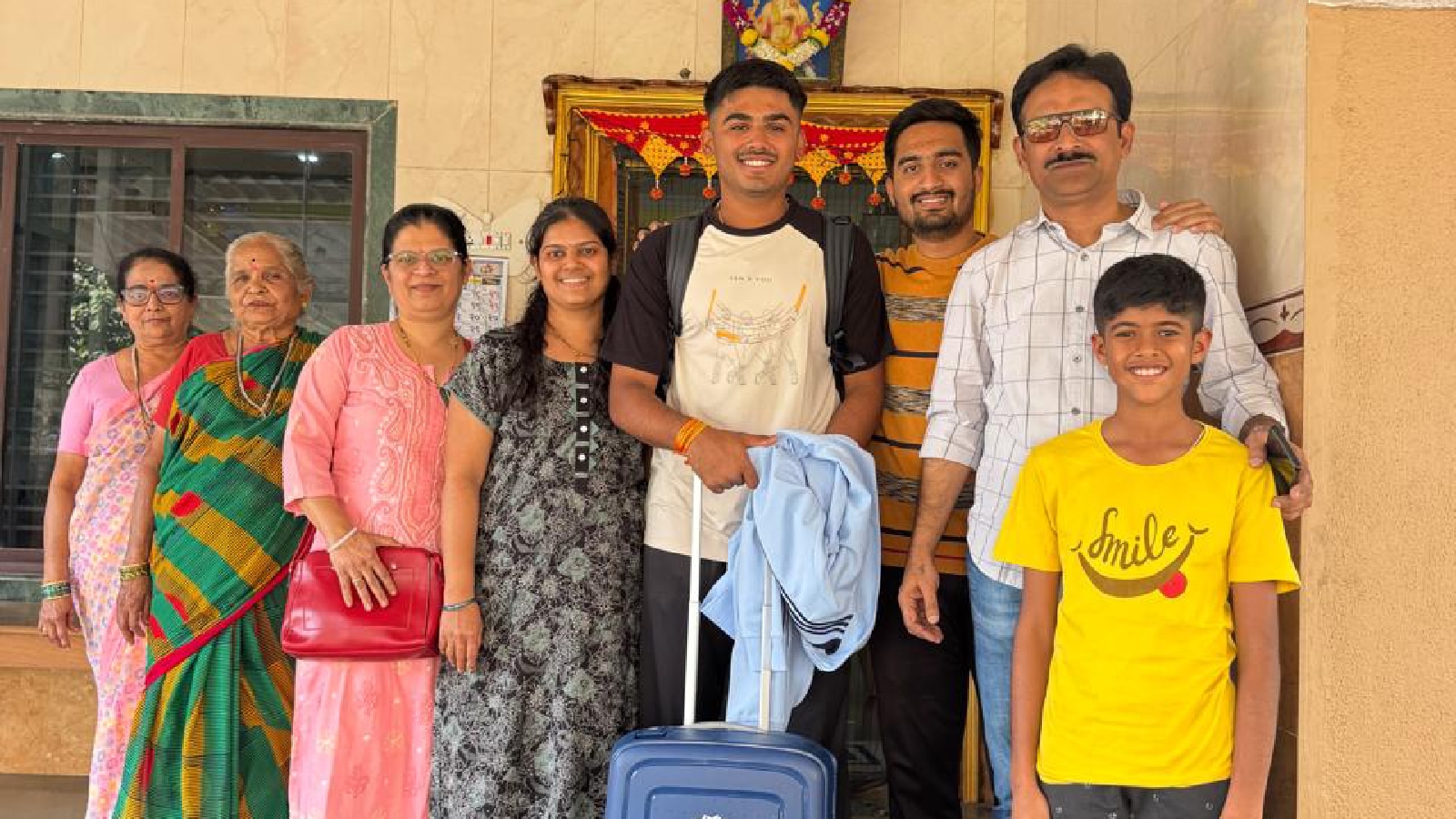 Ayush Mhatre with his family.
Abhigyan Kundu, India’s wicketkeeper-batsman, had just returned from training when his family called. The conversation didn’t revolve around batting orders or England’s bowling attack. Instead, his parents wanted to know: Could he sit his 12th-grade board examinations, scheduled for February 10th?
“We talked about his day, about how well the team played,” says Abhigyan’s father, Abhishek, who works at Tata Consultancy Services. “But we also asked if he’s had time to study. We discussed whether he should appear for his board exams now or consider open university later. As a family, we want to think about what’s nearest, what’s next.”
It’s a quintessentially Indian conversation—the simultaneous pull of ambition and pragmatism, of dreams and duty. Cricket may offer a path, but education remains the foundation.
The fifty and what it means
Ayush Mhatre’s half-century in the semifinal has quieted some doubts, though Yogesh is careful not to let expectations run wild.
Story continues below this ad
“People are expecting him to perform, but he’s the kind of player who will leave an impact somewhere—be it with the ball, in the field, or with the bat,” Yogesh says with a father’s fierce pride. “For him, the team always comes first.”
It’s the kind of statement that sounds like a press conference platitude until you realize it’s also a father trying to protect his son from the crushing specificity of expectation. A fifty is lovely. A hundred would be better. But what matters is the win—and what comes after.
The ladder to someplace good
Both families understand what success at this level means. The Under-19 World Cup isn’t the destination—it’s the audition. Perform here, and doors open. Stumble, and the ladder gets steeper.
For Abhishek Kundu, his son’s visibility has already begun reshaping his own life in unexpected ways. Old friends—lost to the slow entropy of work schedules and distance—have started reaching out again.
Story continues below this ad
“So many people are reconnecting, especially old friends we’d fallen out of touch with,” he says. “His name is appearing in articles, on scoreboards. People recognize it. At the office, in the neighborhood, they’re calling me ‘Abhigyan’s father’ now.”
He pauses, then adds the quiet caveat every Indian parent seems hardwired to offer: “But I feel this is nothing. He has a long way to go.”
Friday will be long for Yogesh Mhatre. The mundan ceremony will proceed with its ancient rhythms—prayers, shaved heads, blessings for a new beginning. And somewhere between the rituals, he’ll glance at his phone, watching numbers flicker on a screen, hoping his son’s new beginning is unfolding half a world away.
It’s an image that captures something essential about this moment: the beautiful, impossible balancing act of being present for both the life you’re living and the dream that’s taking flight.
Story continues below this ad
Saturday’s final will come. England will arrive ready. The favorites tag will hang heavy. But tonight, in Virar and Navi Mumbai, two families are doing what families do—worrying about food, exams, phone batteries, and whether their sons are sleeping enough.
The cricket will take care of itself. It always does.


