


2016 was a fascinating year for chess, with a new generation of prodigies beginning to emerge across the world. In December that year, at the IIFL Wealth Open, I encountered one of these emerging talents: a 10-year-old Gukesh. What struck me immediately was his insatiable appetite for chess. He was playing in both the Under-12 and Open tournaments simultaneously, meaning he was playing two rounds a day while everyone else played just one!
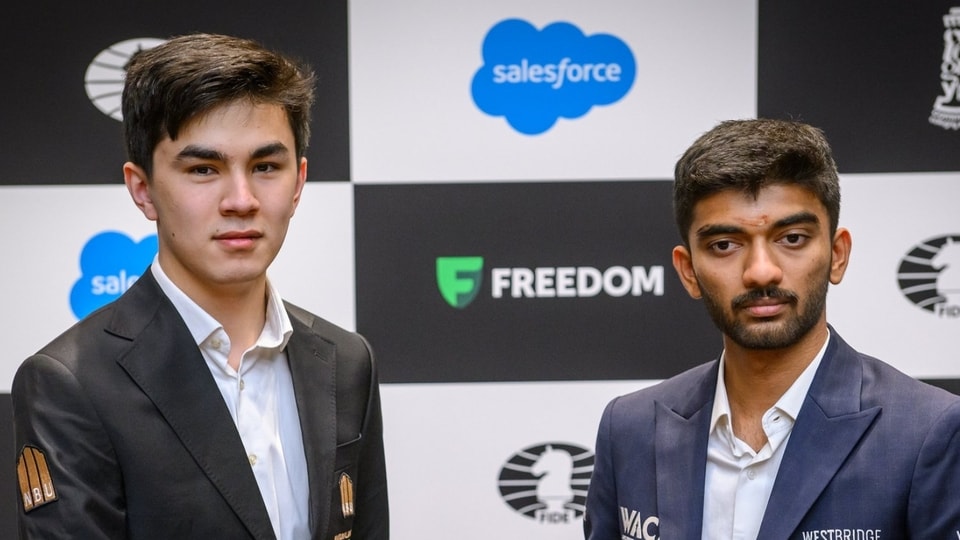
We played twice over the next four months, and he came at me with full ferocity on both occasions. I was fortunate to win both games, but Gukesh’s extraordinary fighting spirit already stood out. Unlike most other promising kids of his age, he approached every game with an uncompromising ambition to win.
Our third encounter came at the 2019 World Rapid and Blitz Championships. Knowing that my opportunities to beat him were running out, I approached these games with full motivation and managed to win the rapid game. Later that day, I remember Gukesh sitting melancholically, quietly watching the tiebreak between Magnus Carlsen and Hikaru Nakamura unfold. The following day, he returned with steely resolve and beat me convincingly in the blitz. I was impressed by his mental fortitude and ability to quickly adapt and bounce back.
Also Read: Football weekly round-up: Familiar United slide on weekend of comebacks and upsets
Gukesh underwent a massive transformation during the pandemic. His opening preparation improved substantially, and his calculation reached extraordinary levels. Equally noteworthy was his ability to recover from difficult situations. I remember him looking down and out during the 2023 Asian Games in Hangzhou. Just a few months later, he won the Chennai Grand Masters, securing his qualification for the Candidates!
Gukesh’s extraordinary calculation ability has occasionally become a double-edged sword. During periods of low confidence, it can lead him to overthink and drift into time trouble, something we have witnessed this year. However, his performance at the 2026 Olympiad offers plenty of encouragement. His history of adapting and bouncing back, something I witnessed firsthand in 2019 and 2023, gives me confidence. His indomitable spirit remains the same as that of the 10-year-old boy I encountered in 2016.
My encounters with Sindarov
I have played Sindarov only once, at the 2017 Sharjah Masters. He was just 11 years old, but the win was anything but easy.
Since then, I have observed him on several occasions, both as a coach of his team and as an opponent. One such occasion was the 2018 World Youth Under-16 Chess Olympiad, where Uzbekistan fielded four players who would later form the core of their gold-winning 2022 Olympiad team. India faced Uzbekistan after the rest day, with Arjun Erigaisi and Sankalp Gupta playing White against Abdusattorov and Sindarov respectively. While Arjun produced a masterpiece, Sindarov completely overwhelmed Sankalp. Even at that formative stage, his immense strength was evident.
Sindarov went on to play a crucial role in Uzbekistan’s historic 2022 Olympiad gold in Chennai and later the 2026 Olympiad gold in Samarkand. I had the privilege of watching him closely as a coach during the 2023 and 2026 editions of the Global Chess League.
What stands out about Sindarov is his fantastic and intuitive feel for the initiative and speed. His opening preparation was one of his weaker aspects in 2023, something Arjun Erigaisi exploited brilliantly at the 2023 World Cup. However, his preparation and confidence have improved significantly, particularly since 2025. At the 2026 GCL, he created chances against world-class opposition in almost every game.
His vulnerabilities lie in his occasional tendency to overextend positions and lose his sense of danger due to high emotions. This was evident against Jonas Bjerre in the 2023 GCL final and on a few other occasions. These tendencies could become important factors in a long World Championship match, especially with the added pressure of starting as a favourite.
Fickle ratings
Gukesh’s performances have come under considerable criticism in 2026. However, we should not forget that the chess world, and the world at large are going through unprecedented trends. Never before have two 20-year-olds faced off for the World Championship title. The world of chess, much like the world around us, is changing rapidly. As a result, past trends and data are becoming less reliable indicators of what lies ahead. Ratings themselves have become volatile, as recently witnessed in the performances of many top players, most notably Magnus Carlsen in the Total Chess World Championship Tour Pilot. It is clear to me that the current elo rating system no longer serves as a reliable measure of players’ strength as it once did. Only time can tell us who will turn out to be the best player of the current generation.
An exciting match
The year 2026 has so far belonged to Sindarov. Gukesh however has stayed a bit longer at the elite level, and himself reached similarly dizzying heights in 2024. Evaluating the match only based on their play in the last few months may suffer from recency bias.
Sindarov’s form, confidence and preparation in recent times have definitely been impressive. However, in the match format, his opening preparation can be neutralised, and confidence and form will be hugely influenced by the initial few games. Therefore, we have a truly exciting match on our hands!
India and Uzbekistan have been two of the best chess nations in the post-pandemic era, and this match will mark another chapter in our rivalry.
GM Srinath is a prominent Indian chess coach and team captain. He captained India’s gold-winning Open team at the 2024 Chess Olympiad. He will write for the Hindustan Times during the World Chess Championship match


